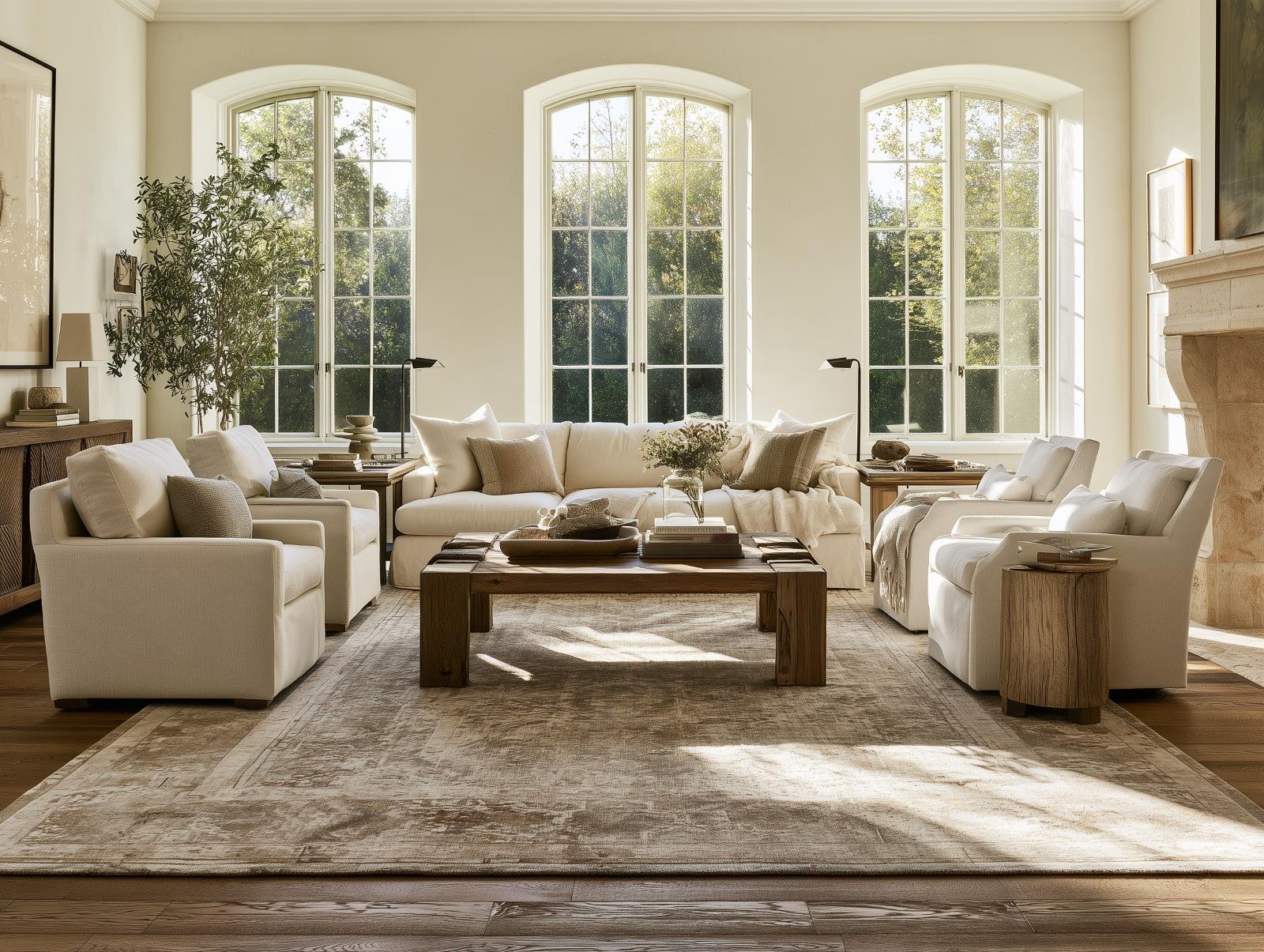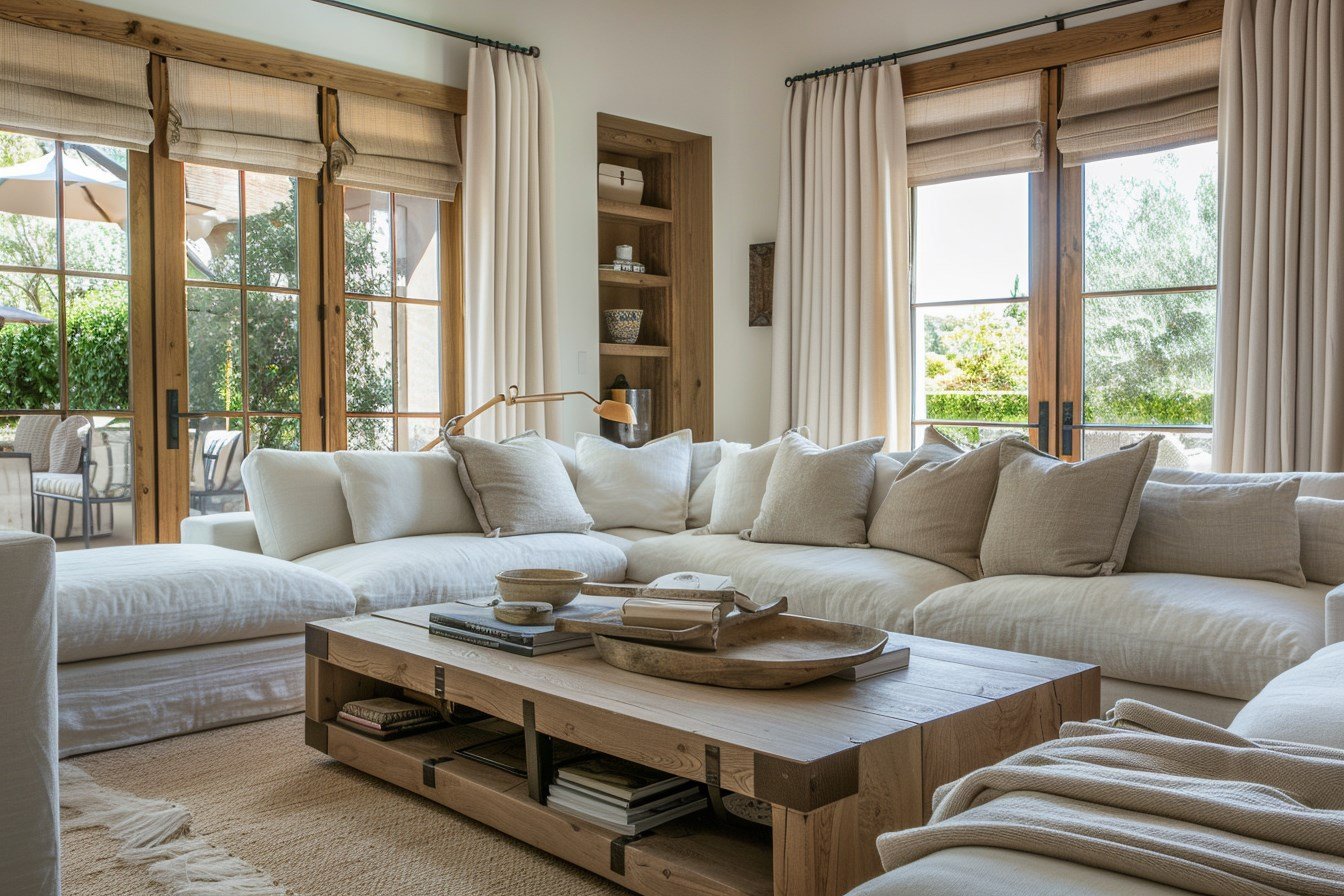
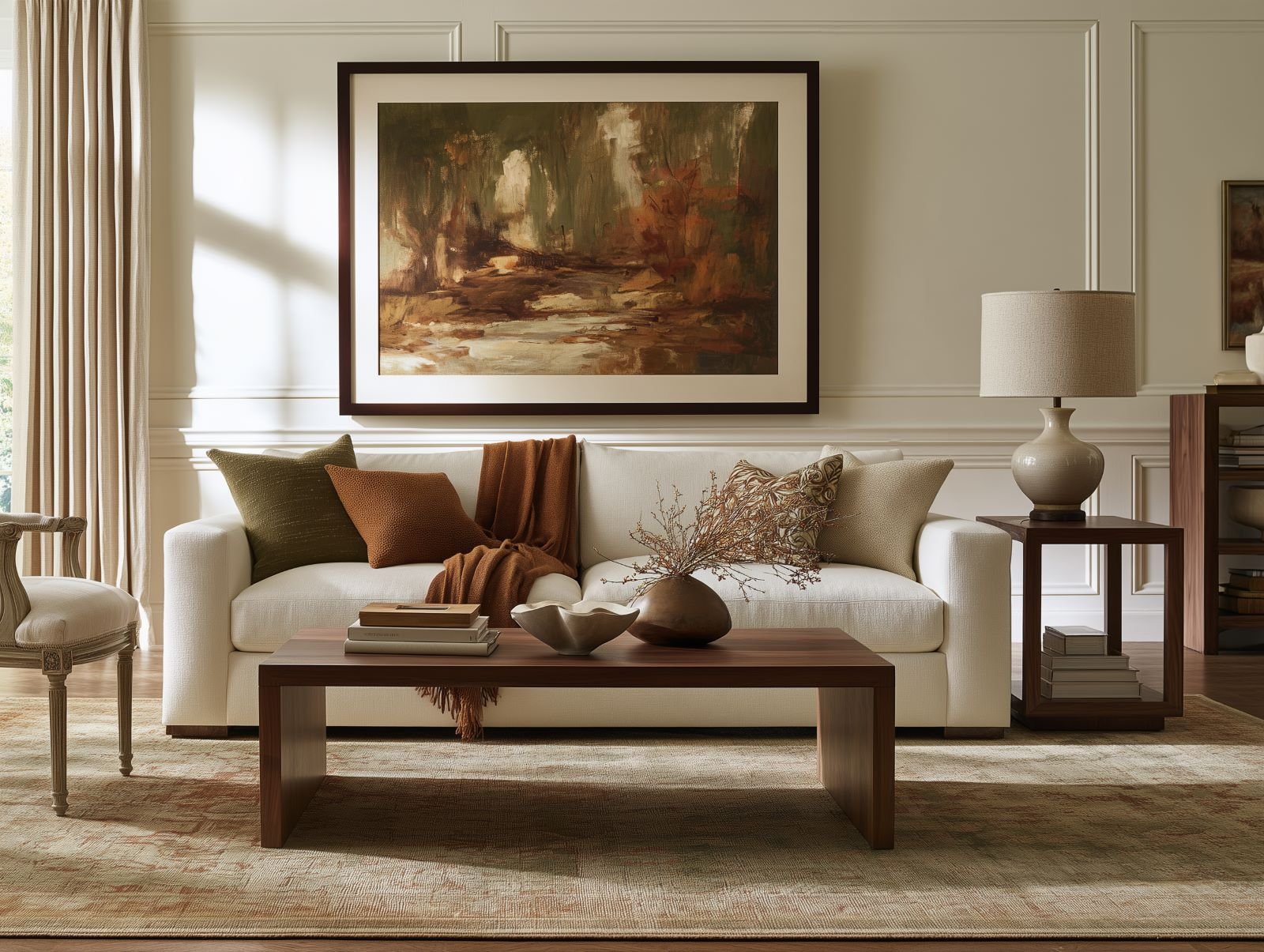
A coffee table may be one of the last pieces you choose for a living room, but it has a remarkable effect on how the space works. Learning how to choose a coffee table starts with understanding your seating layout, daily habits, and the proportions of your room. The right one brings the seating area together and gives everyone a convenient place to set down a drink. The wrong one can make a beautiful sofa feel out of scale or turn a natural walkway into an obstacle course.
Begin with the room rather than the table. Measure the space, consider how you use it, and then narrow your options by size, shape, and material. Here is a practical approach to making those decisions with confidence.
Start With Your Room and the Way You Use It
Before browsing coffee tables, measure your sofa and the open floor area in front of it. Note the distance to any chairs, media cabinet, fireplace, or doorway. Then pay attention to where people naturally walk through the room.
The available floor space is more useful than the room’s overall dimensions. A table can technically fit between a sofa and a TV cabinet yet still make it difficult to sit down or pass through.
Next, decide what you need the table to do. Is it mainly a place for drinks and a book? Will it hold games, remotes, and everyday clutter? Do children play around it? Does someone regularly work from the sofa? These answers will help you judge whether you need a generous surface, concealed storage, a durable finish, or something that can move easily.
Designer’s tip: Before ordering, outline the proposed table dimensions on the floor with painter’s tape suitable for your flooring. Walk around the outline and sit in every nearby seat. It is a simple way to notice a tight corner that a floor plan or product photo might miss.
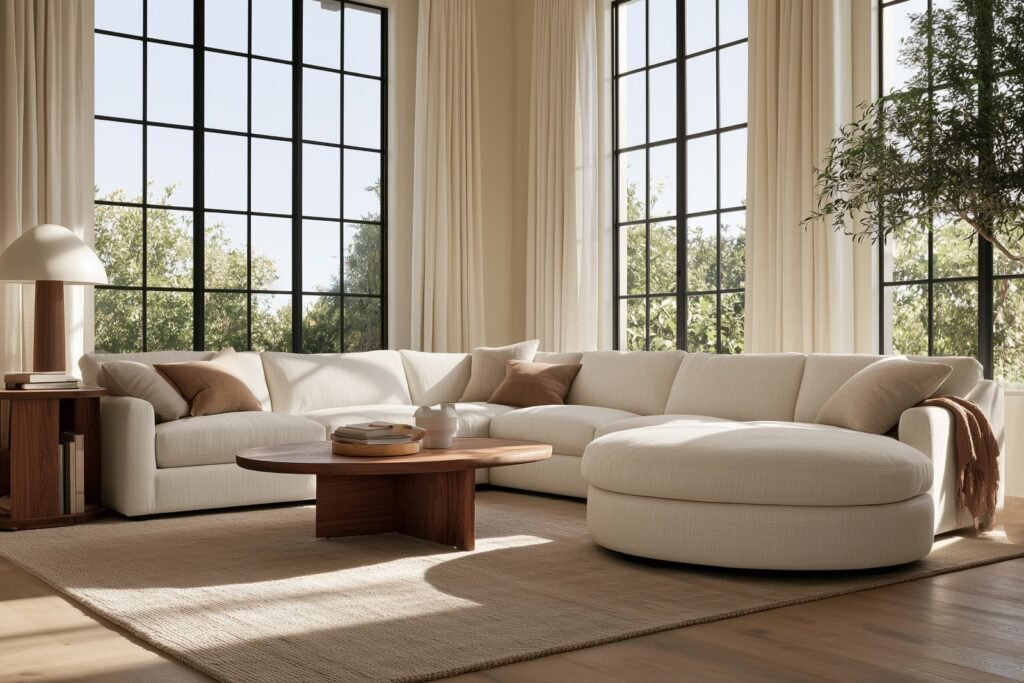
Choose the Right Coffee Table Size for Your Sofa
Use the Two-Thirds Rule as a Starting Point
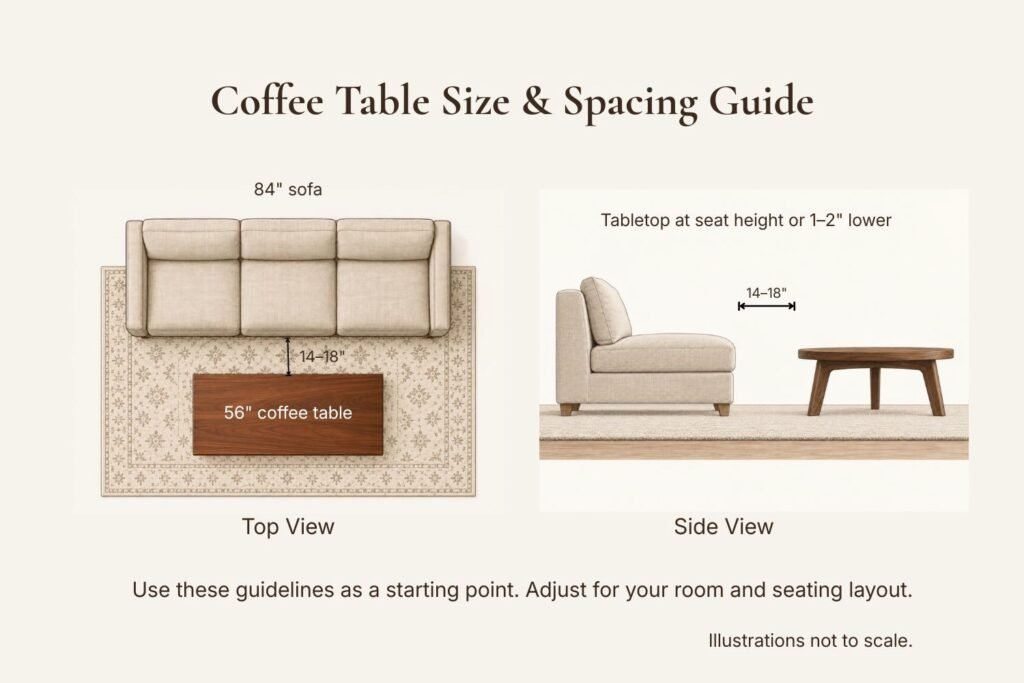
For a standard sofa, a coffee table around two-thirds of the sofa’s length often looks balanced. For example, an 84-inch sofa suggests a table around 56 inches long.
Think of that number as a starting point, not a required size. A smaller table may be the better choice if a doorway or chair needs more room. In a spacious seating arrangement, a slightly larger table—or a pair of tables—may serve more people.
What matters most is that the table looks substantial enough beside the sofa without blocking the seating area.
Check the Depth, Not Just the Length
Length is only half the decision. A deep coffee table can consume the space between a sofa and the furniture opposite it, even when its length looks perfect.
Measure from the front edge of your sofa to the next obstacle. Allow room to sit comfortably and preserve the route people use to cross the room. In a narrow living area, a slimmer rectangular or oval table may provide useful surface space while keeping the layout open.
Match the Height to the Sofa Seat
As a practical guideline, choose a tabletop close to the height of your sofa’s seat cushions, or approximately one to two inches lower. Measure the top of the seat cushion rather than relying on a standard coffee table height.
A very low table can look elegant in a relaxed room, but it may be inconvenient if you frequently reach for drinks or play games. A taller table may work for a specific purpose, though it deserves a careful check beside the sofa before you buy.
Leave Enough Space Around the Coffee Table
Aim to leave roughly 14 to 18 inches between the sofa and the nearest edge of the coffee table. That usually keeps the surface within reach while giving your legs room as you sit down or stand up.
Look beyond the sofa, too. A route people regularly walk through needs more space than the small gap used only to reach a seat. Around 30 inches of clear passage is a useful planning target, with additional room wherever the layout allows.
These measurements help you evaluate a layout; they are not a substitute for testing it. If the table forces you to turn sideways on the way to the door, adjust its size, position, or shape.
Pick a Shape That Works With Your Seating Layout
The best coffee table shape depends on the furniture surrounding it and the direction people move through the room.
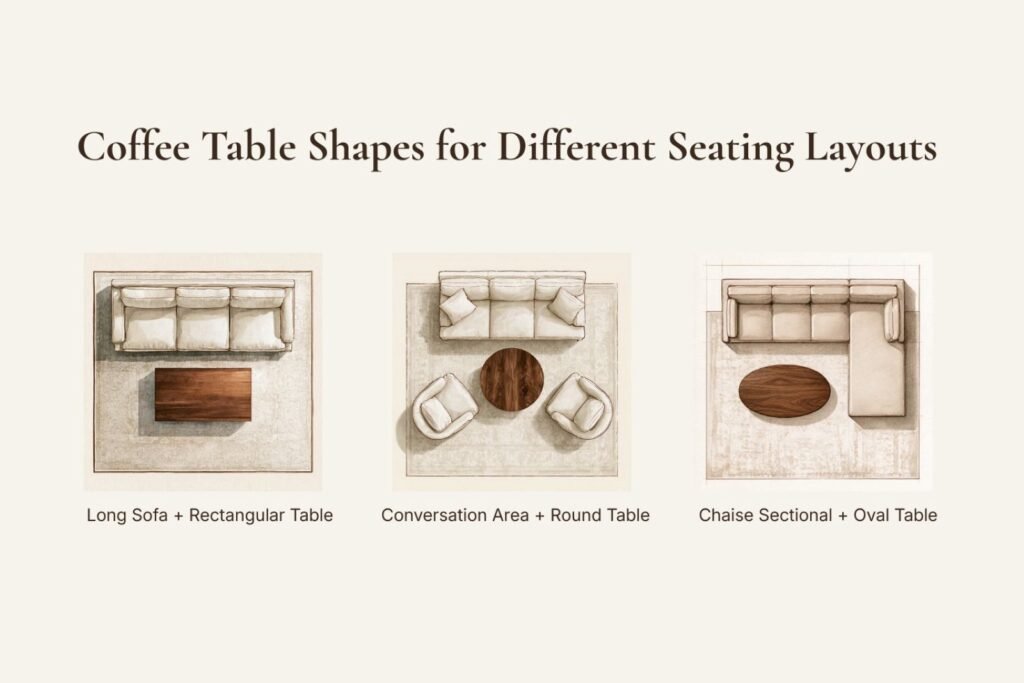
Rectangular and Oval Tables for Long Sofas
A rectangular table generally follows the proportions of a long sofa and offers generous surface area. It is a straightforward choice when the seating area is long and relatively narrow.
An oval table provides a similar length with softer ends. That can make movement around the table feel easier, particularly when a chair, chaise, or walkway sits near one of its corners.
Round and Square Tables for Conversation Areas
A round table can work beautifully when several seats face a central point. Its curved edge also softens a room filled with straight lines.
A square table may suit a broad seating arrangement with ample space on all sides. Check its depth carefully, though: a large square can look appropriate in photographs while leaving too little room to pass in real life.
What Works With a Sectional or Chaise?
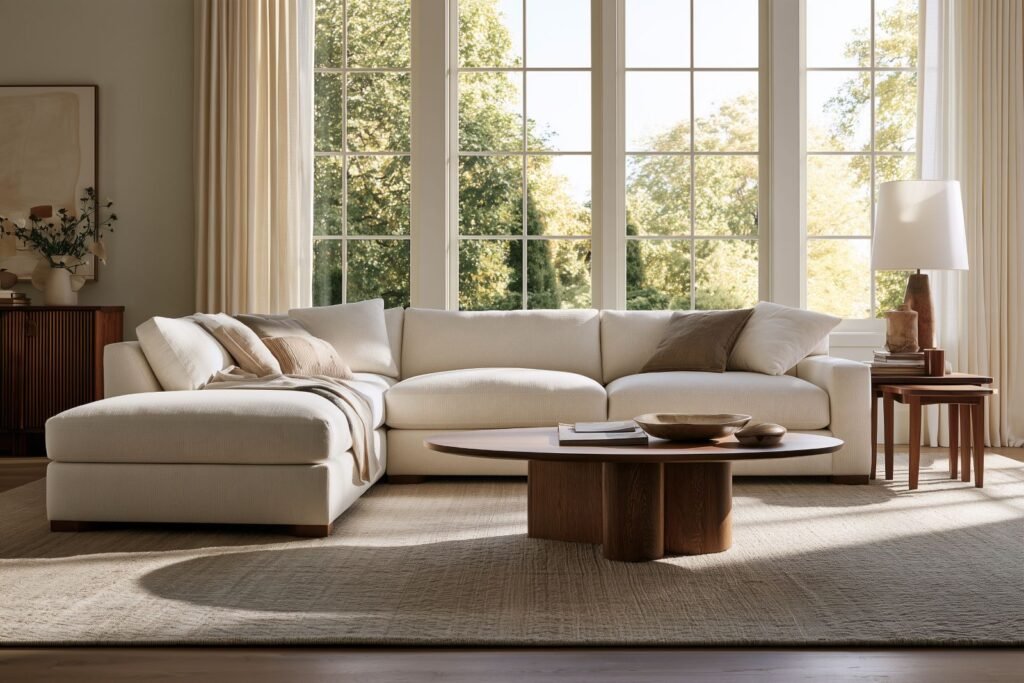
With a sectional, look at the main run of seats and the open area in front of them before choosing the table size. Applying the two-thirds rule to the sectional’s entire outside width can produce a table that overwhelms that opening.
An oval or appropriately sized rectangular table can follow the longer side of an L-shaped sectional. A round table may suit a compact arrangement or a layout with several paths around it. For a broad U-shaped sectional, a square table or a pair of coordinated tables may make the surface more accessible from different seats.
The useful question is: “Which shape fits this open space and lets people use every seat comfortably?”
Choose a Material for Your Lifestyle
Once the size and shape work, consider how the material will look and wear in your home.
Wood brings warmth and works with many decorating styles. Pay attention to the finish and care instructions if the table will see daily drinks, snacks, or craft projects. Wood tones do not need to match every other piece exactly; a considered mix can give the room more depth.
Glass and slim metal frames can give a table a lighter visual presence, which is helpful when the sofa or surrounding furniture already feels substantial. Glass also shows fingerprints and requires regular cleaning, so weigh that airy look against your routine.
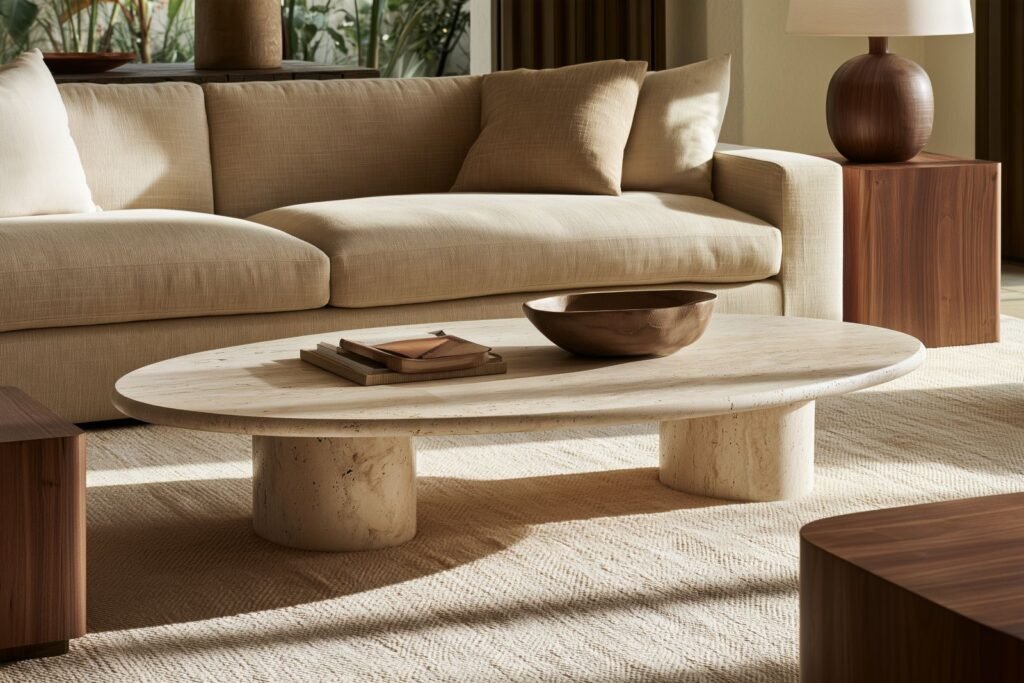
Stone can make a striking focal point and add natural texture. Check the weight, finish, and care requirements of the specific stone before buying. Marble and travertine, for example, need thoughtful care around spills and acidic liquids.
Upholstered ottomans offer a softer alternative, especially in a room designed for lounging. If you plan to set down drinks, allow space for a stable tray. In a home with young children or busy walkways, the shape, stability, and edges of any table deserve as much attention as its material.
Consider visual weight as well as durability. A solid drum table can anchor a light, airy sofa, while an open base may balance a substantial sectional. The table should contribute to the room without making the seating area feel crowded.
Consider Storage, Nesting Tables, or an Ottoman
A traditional coffee table is only one solution. Choose added features because they solve a problem in your room.
A storage coffee table can keep remotes, games, and other small items close without leaving them in view. Check how drawers or lids open once the table is surrounded by furniture.
Nesting or paired tables offer flexibility. You can spread them out when guests need a surface and bring them together afterward. They can also serve a wide sectional more effectively than one table placed too far from some seats.
An ottoman adds softness and may provide an extra place to sit or rest your feet, depending on its construction. It is a useful option when comfort matters more than a large, firm tabletop.
For a small living room, consider whether a central table is the best use of the space. A compact table, movable pair, or well-placed side table may work better than a centerpiece that interrupts the flow.
How to Choose a Coffee Table: A Designer’s Final Checklist
Before placing an order, confirm:
- The table’s actual length, depth, and height, rather than judging its size from a styled photo.
- Its proportion to the sofa’s main seating area.
- Enough space to sit, stand, and walk around it.
- A surface that suits the way your household will use and maintain it.
- How it will be delivered and brought into the room, especially if it is large or heavy.
Then test the footprint on the floor. The best coffee table should feel as comfortable in your daily routine as it looks in your living room.
Frequently Asked Questions
Can a Coffee Table Be Higher Than the Sofa?
It can, but compare the height with your sofa’s seat before deciding. A tabletop at seat height or slightly lower is generally comfortable for everyday use. A taller piece may suit a particular activity or a more formal room, but it can feel awkward beside low seating.
What Shape Coffee Table Is Best for a Small Living Room?
Round and oval tables are often helpful because their curved edges make tight paths easier to navigate. A narrow rectangular table can work just as well when the seating area is long. Choose according to the space you can leave around the table.
Should a Coffee Table Be Centered With a Sectional?
Center it in the usable seating area, which is not always the same as the center of the sectional’s outside dimensions. With a chaise, that often means aligning the table more closely with the main seats while keeping access to the chaise clear.
Final Thoughts: The Right Table Brings the Room Together
When deciding how to choose a coffee table, start with size, clearance, and shape, then consider the material and how you will use it every day. A well-chosen table balances the sofa, supports your daily routines, and keeps the room easy to move through. Use proportion guidelines as a starting point, and let your particular layout guide the final decision.
If you are still planning the full seating area, our guides to choosing the perfect sofa and choosing an area rug can help you bring all three pieces together.