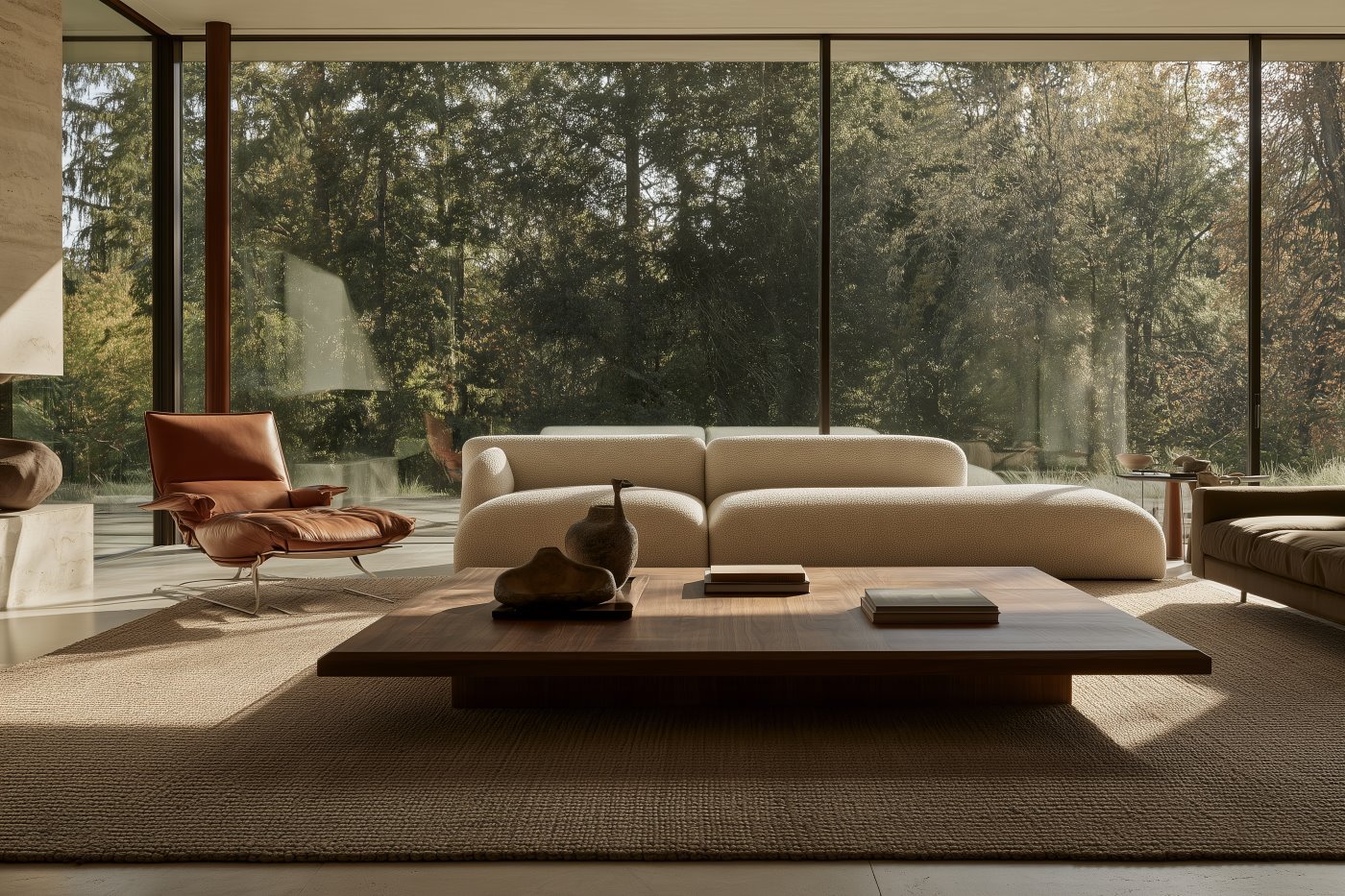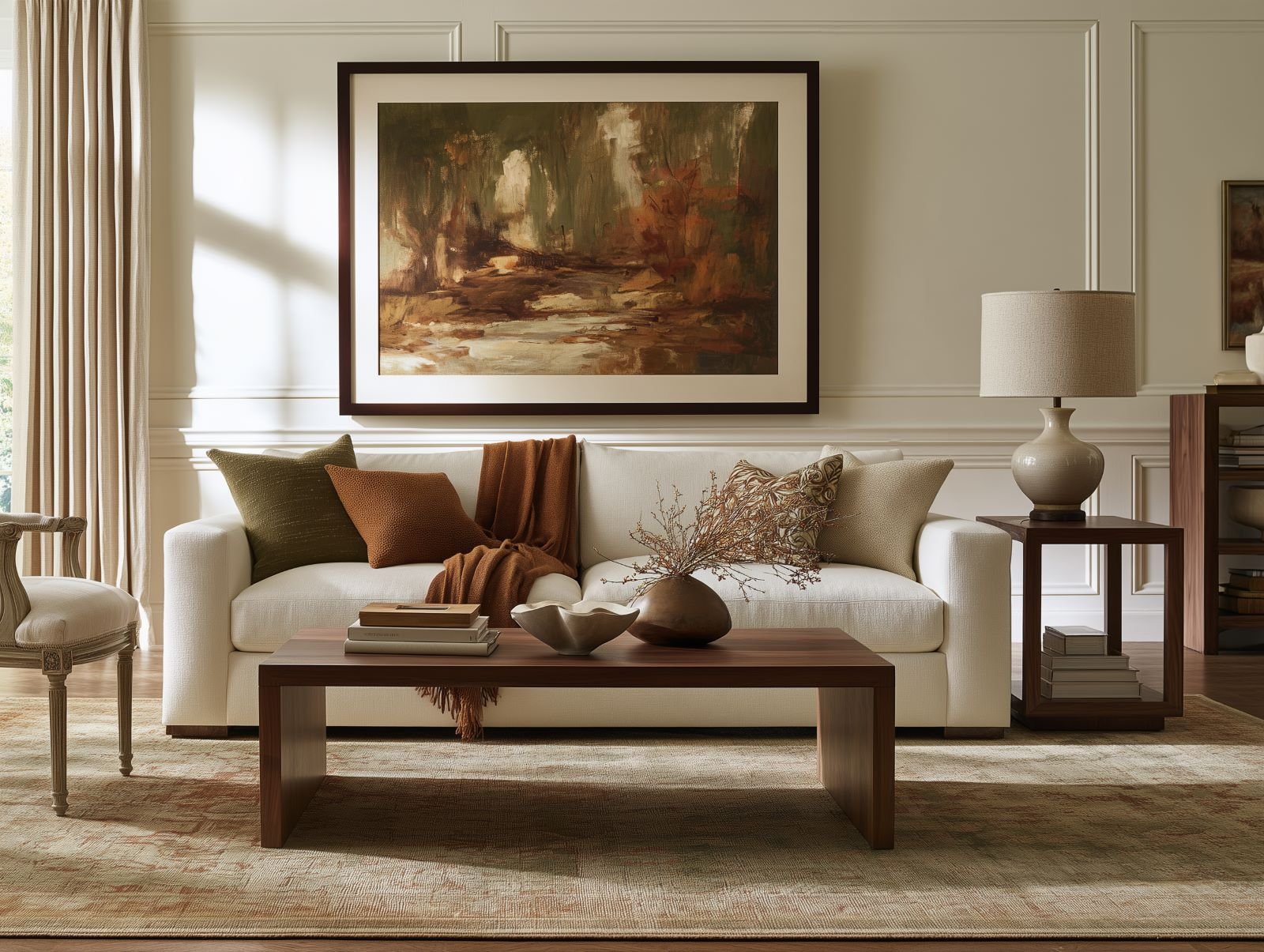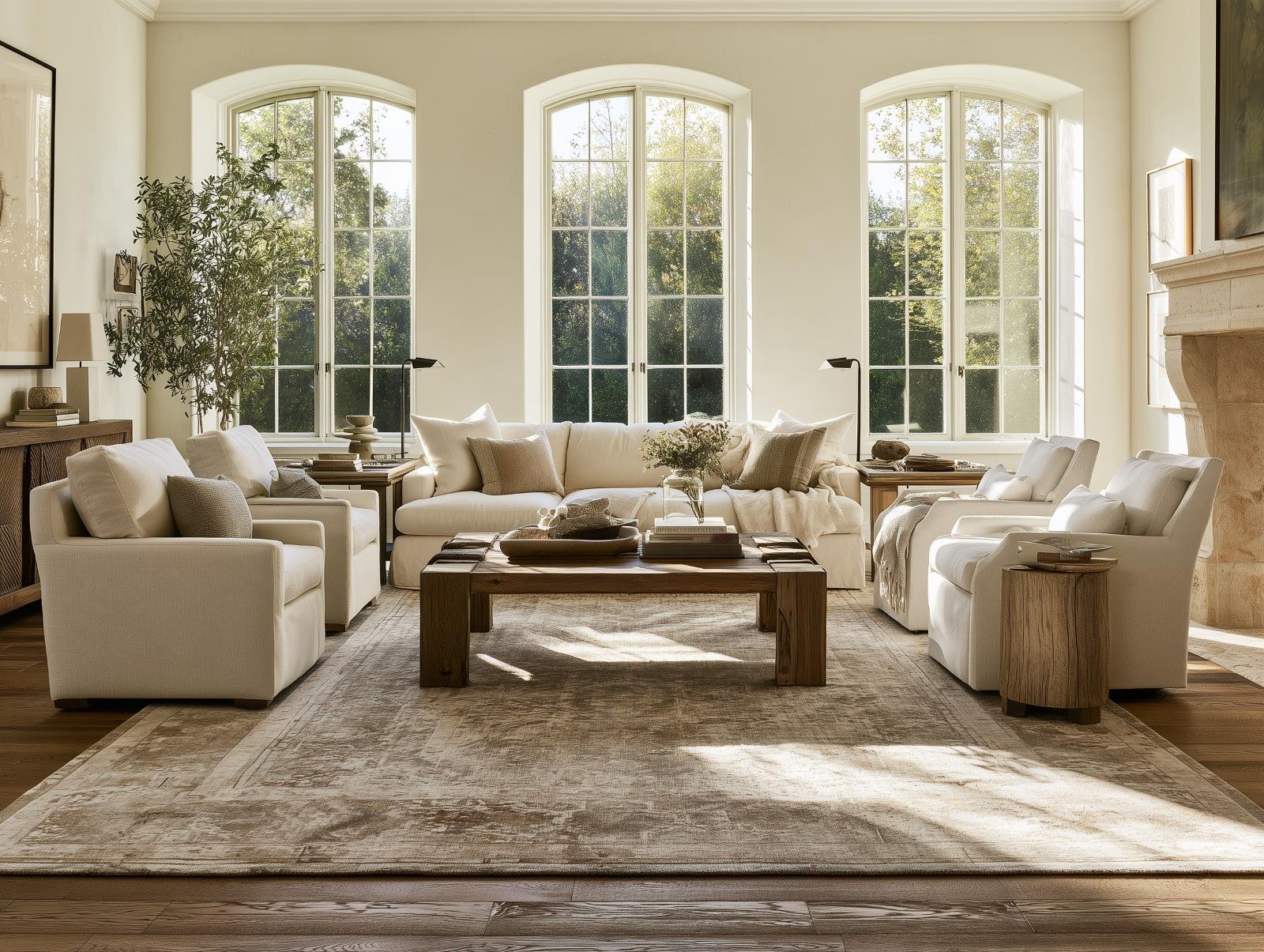

Learning how to choose an accent chair starts with understanding what your room needs. A well-chosen chair can soften the lines of a sofa, introduce a beautiful material, or turn an overlooked corner into somewhere you enjoy spending time.
Yet a chair that looks inviting in a photograph may feel too deep when you sit down or take up more floor space than you expected. The most successful choice brings together comfort, proportion, and a clear purpose.
To choose an accent chair, start with how you will use it, measure both its footprint and its usable seat, and consider how it relates to your sofa. Then select a shape and upholstery that suit your daily life, and place it where it supports the room’s layout.
Here is how to work through those decisions with confidence.
1. Start with How You’ll Use the Chair
“Accent chair” describes a chair’s role in a room rather than a single furniture type. It might be an upholstered armchair, an open wood-frame chair, or a swivel chair. Its contribution can be subtle: a quiet change of texture can be just as effective as a bold color.
Before considering finishes, decide what you want the chair to do.
Everyday Seating and Conversation
For a chair that forms part of your main seating group, prioritize a posture that feels comfortable for conversation. You should be able to sit with your back supported without constantly adjusting a cushion or leaning forward.
Supportive arms can make the chair more pleasant to use and provide something to hold when standing. Check their height and shape; a beautiful exposed wood arm feels different from a generously padded one.
Reading and Relaxing
Think about how you actually read. If you sit upright with your feet on the floor, an especially deep chair may leave you without useful back support. If you prefer curling up, you may appreciate more seat width or room to change position.
An ottoman can support your preferred posture, but it also increases the space the arrangement requires. Plan the chair, footrest, reading light, and table together.
Occasional Seating in a Bedroom or Entryway
A bedroom chair might support a few quiet minutes in the morning, while an entryway chair may be used mainly for putting on shoes. These uses call for different features.
For dressing, a stable chair with an accessible seat can be more practical than a low lounge chair. Even when use is brief, comfort and safe placement still matter.
2. Measure the Chair, the Space, and the Clearances
Check the chair’s dimensions before judging its size from a styled photograph. Wide-angle photography, surrounding furniture, and an oversized room can all change your impression of scale.
Overall Dimensions vs. Usable Seat Dimensions
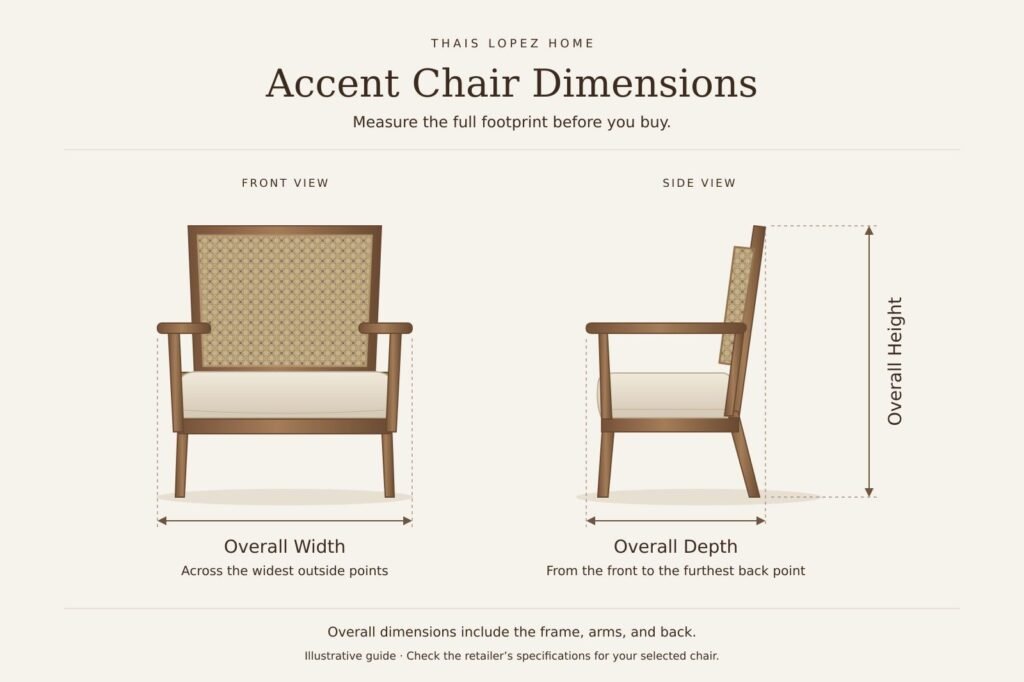
Overall measurements tell you whether a chair fits the room. Seat measurements help you understand whether it fits you.
| Measurement | What it tells you | What to check |
| Overall width | The chair’s widest point | Include arms that flare beyond the seat |
| Overall depth | Its front-to-back footprint | A reclining back can make a chair deeper than it appears |
| Overall height | The height of the entire chair | Consider windows, views, and nearby furniture |
| Seat width | Space available between the arms | Substantial arms can reduce usable sitting space |
| Seat depth | Space from the seat front to the supporting back | Clarify whether a loose back cushion is included |
| Seat height | Distance from the floor to the seat | Cushion compression changes how it feels when occupied |
| Arm height | Position of the armrests | Compare with your resting arms and nearby side table |
Two chairs with similar outside dimensions can offer very different seats. A compact open-frame chair may provide more usable width than a larger chair with thick upholstered arms.
Leave Room to Sit, Move, and Swivel
Mark the chair’s overall width and depth on the floor with painter’s tape suitable for your flooring. Then walk around the outline and imagine sitting down, extending your legs, and getting up.
As a starting point for a residential seating arrangement, roughly 18 inches between a chair and coffee table can be useful. Check it in the actual layout: a deep seat, an angled position, or a person’s needs may call for more room. Keep the main walking route separate from this legroom.
A swivel chair also needs clearance as it turns. A chair that fits while facing forward may strike a table or wall when rotated. Recliners require their own operating clearances, which should come from the manufacturer.
Check Doorways and the Delivery Route
Measure door openings, hallways, stair turns, and elevator access before ordering. Check delivery instructions and whether the chair arrives assembled or has removable parts.
A chair’s width alone cannot confirm that it will pass through a doorway. Packaging, depth, height, and the space available to turn all affect delivery.
3. Get the Proportions Right Beside Your Sofa
Look at the chair and sofa as a seating composition. They do not need identical dimensions, but they should feel comfortable together.
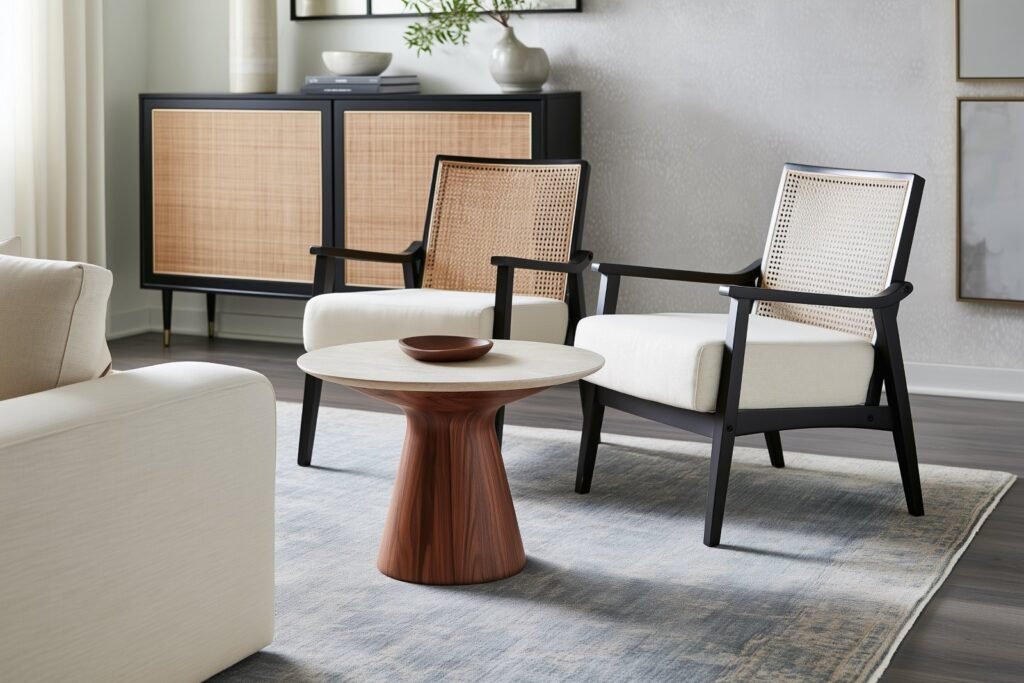
Compare Seat Height, Back Height, and Visual Weight
Comparing seat heights is a useful starting point, especially for a conversation group. A very low lounge chair beside a high, upright sofa creates a different experience from seats that place people at more similar levels.
Back heights can vary successfully. A wingback chair may add a welcome vertical element beside a low sofa, provided it does not overwhelm the surrounding arrangement or interrupt an important view.
Also consider visual weight. Exposed legs and an open frame reveal more floor and background. A skirted or fully upholstered chair creates a more solid presence. Neither is inherently better; choose the effect your room needs.
Choose One Accent Chair or a Pair
A single chair can complete an intimate seating group or balance a sofa in an irregular room. A pair can create a more structured composition and provide additional seating.
Before choosing two, plan their combined footprint, the space between them, and access to each seat. Repeating a generous chair doubles its visual presence as well as its seating capacity.
Keep a Small Living Room Comfortable and Open
In a smaller room, compare usable seat space with the chair’s total footprint. Slim arms, a tighter back, or a shallower overall depth may help preserve comfort while reducing bulk.
An open frame can make the arrangement feel lighter, but it does not reduce the physical space needed. Test circulation rather than relying on a chair’s airy appearance.
If you are choosing both pieces together, start with our guide on how to choose the perfect sofa, then select an accent chair that complements its scale and comfort.
4. Check Comfort Beyond the Cushion
Softness is only one part of comfort. The relationship between seat height, depth, back angle, and support determines how a chair feels over time.
Match Seat Height and Depth to the Person
When sitting upright, check whether your feet rest comfortably on the floor and whether you can use the backrest without pressure behind your knees.
If you slide forward to reach the floor, the seat may be too deep for that posture. If a low seat makes standing difficult, a higher, more supportive option may suit you better.
Households with different heights may find that two different chairs serve them better than an identical pair.
Evaluate Back Support, Armrests, and Cushion Feel
Spend several minutes sitting as you would at home. Try reading, talking, and standing up rather than judging the chair from a quick perch.
Notice whether the back supports you in a useful place and whether the arms allow your shoulders to relax. Check that the cushion feels supportive beneath its initial softness.
Loose cushions may allow adjustment but can require straightening or fluffing. A tight seat offers a more fixed shape. Your preference should guide the choice.
Assess Comfort When Shopping Online
Compare the listed measurements with a chair you already find comfortable. This gives the numbers a practical reference.
Look for side photographs, construction details, cushion information, and reviews that explain the reviewer’s height or preferred sitting position. Ask the retailer for missing seat measurements.
Read return terms before purchasing, especially for custom upholstery. Confirm fees, exclusions, and whether fabric selection changes the return policy.
5. Choose a Shape That Supports the Room
Chair names overlap. A barrel chair can swivel, and a wingback can also function as a reading chair. Use the shape as a starting point, then assess the individual model.
Swivel Chairs for Flexible Seating
A swivel can be useful when a seat needs to face conversation, a view, or a television at different times. This flexibility can work particularly well in an open living area.
Check how the mechanism feels, whether the chair returns to a starting position, and how much space its full movement requires.
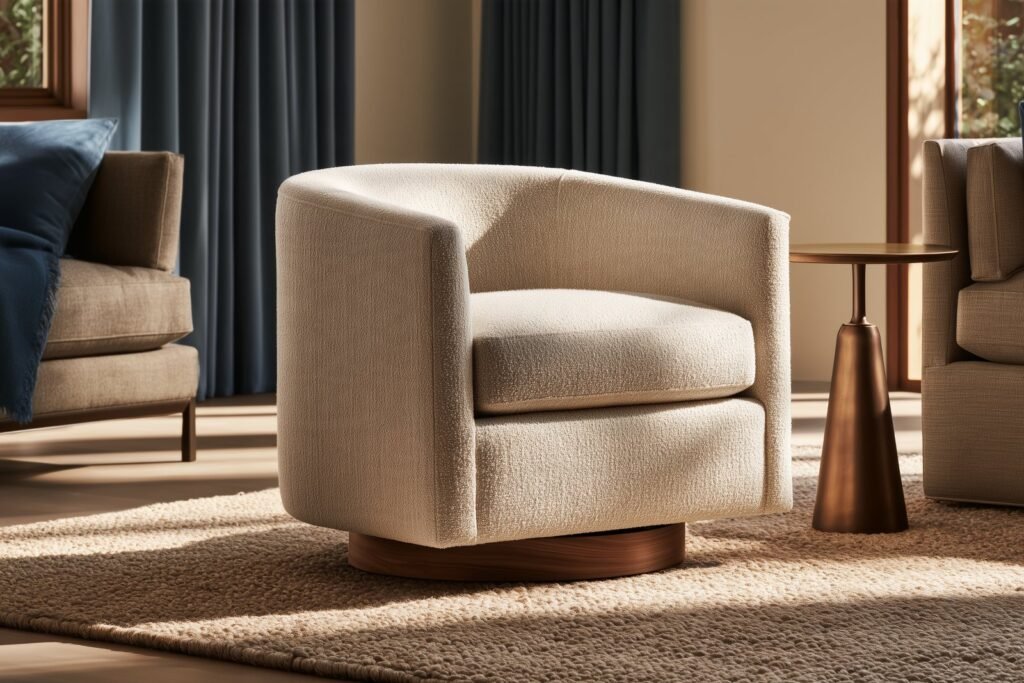
Club, Barrel, and Wingback Chairs
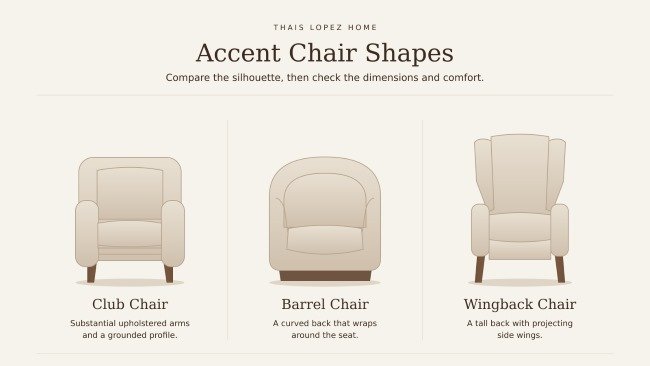
| Shape | What it can contribute | What to check |
| Club chair | A grounded, inviting upholstered presence | Overall bulk and usable seat depth |
| Barrel chair | Curves that soften a room’s straight lines | Interior seat width and the fit of the wraparound back |
| Wingback chair | Height, definition, and a more enclosed feeling | Back angle, head support, and its effect on sightlines |
A high back does not automatically provide comfortable head support. Its shape and position need to suit the person using it.
Open-Frame, Slipper, and Lounge Chairs
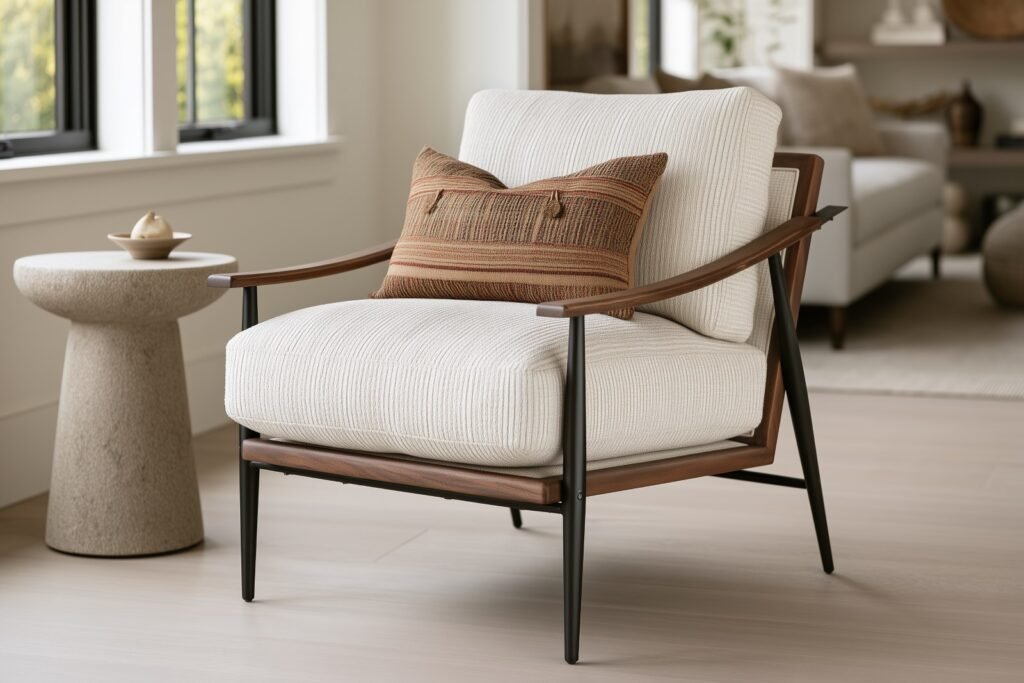
An open-frame chair can introduce wood or metal while allowing views through the structure. Check the feel of exposed arms and the support beneath the cushions.
An armless slipper chair can be convenient where width is limited, although its seat height and lack of arms may not suit everyone.
A lounge chair often encourages a more relaxed posture. Consider whether that posture supports the activity you have planned.
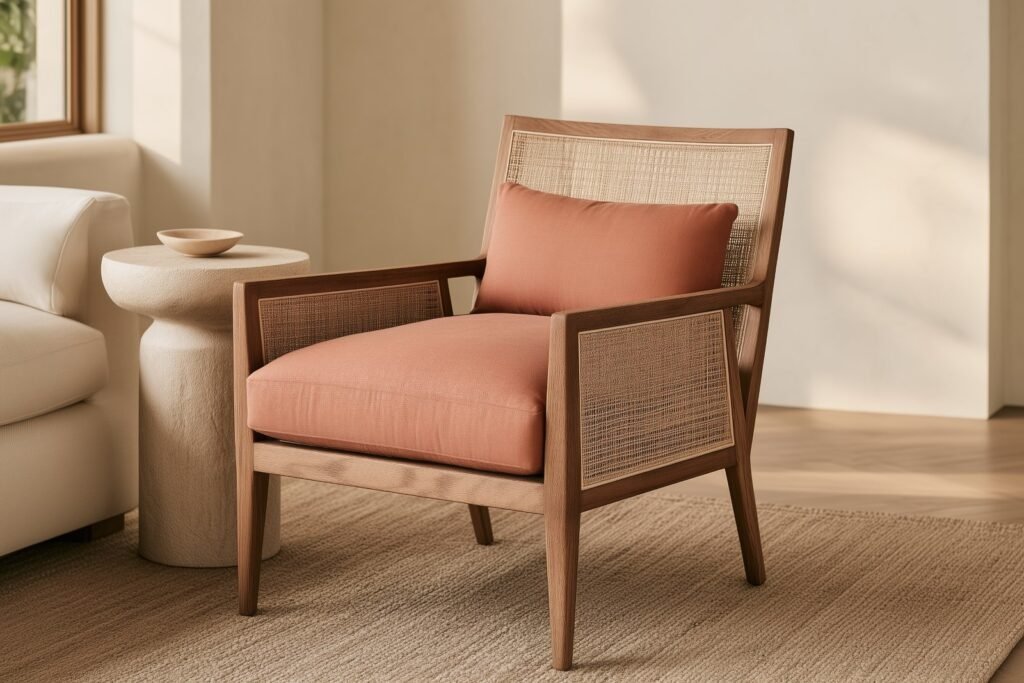
6. Select Upholstery for Everyday Life
Choose upholstery with the same attention you give to color. The right material should suit the chair’s use, your maintenance preferences, and its position in the room.
Fabric, Performance Upholstery, and Bouclé
Fabric offers considerable variety in texture, color, and pattern. Examine the specific fabric rather than assuming its name tells you everything about durability.
For performance upholstery, ask what the stated performance includes. Stain resistance, cleanability, abrasion resistance, and resistance to fading are different characteristics.
Bouclé describes a textured, looped effect rather than one consistent level of durability. If you have pets, inspect the loops and consider whether claws might catch. For any upholstery, follow the manufacturer’s cleaning instructions.
Leather and Exposed Wood Frames
Leather can add warmth and a useful contrast to fabric seating. Its finish affects how it feels, shows marks, and changes with use, so examine samples and care guidance.
For exposed wood, look beyond the stain color. Consider the profile of the arms, the quality of visible joints, and whether the frame feels stable.
Check how these materials relate to existing furniture without requiring every wood finish to be identical.
Check Swatches, Care Instructions, and Construction
View swatches beside your sofa, rug, and flooring in daylight and evening light. A fabric that looks creamy in a showroom may appear cooler or yellower at home.
Ask about frame construction, seat suspension, cushion filling, and the warranty. Construction systems should be evaluated as a whole; one feature alone does not establish the quality of every chair.
For a sunlit location, check the manufacturer’s recommendations and consider window coverings to help protect the upholstery.
Before choosing a fabric, review its care requirements. If you are considering Sunbrella upholstery, consult Sunbrella’s upholstery cleaning guide for fabric-specific instructions.
7. Coordinate Color and Style with Your Sofa
An accent chair can blend quietly into a room or create a distinct point of interest. Both approaches can feel intentional.
Repeat a Color, Material, or Design Detail
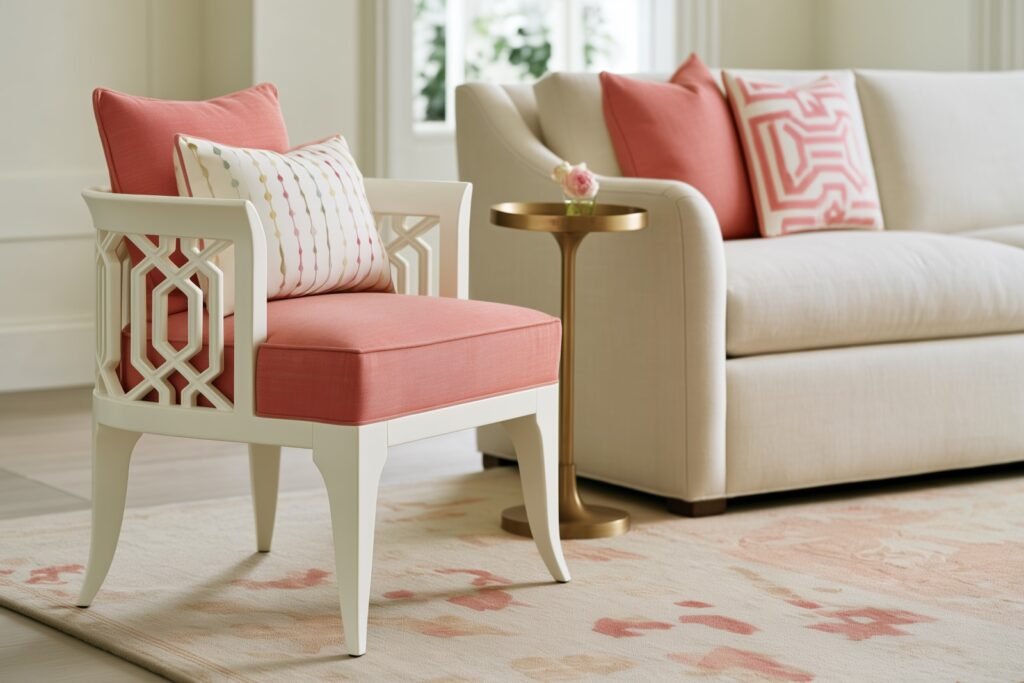
Choose an element that connects the chair to its surroundings: a color from the rug, a wood tone, a repeated curve, or a tailored upholstery detail.
For example, an oatmeal sofa and a muted olive chair can feel related when the rug or artwork carries both tones. The connection does not need to be exact to be convincing.
Introduce Contrast Through Shape, Texture, or Pattern
A curved chair can soften a straight-lined sofa. A wood frame can add definition beside generous upholstery. A patterned chair can introduce movement into an otherwise quiet palette.
In a warm transitional room, a tailored chair with subtle curves may bridge traditional and contemporary pieces. In a coastal room, an open frame and textured upholstery can suggest ease without relying on a nautical motif.
Choose a few purposeful relationships rather than trying to coordinate every detail.
Decide Whether Two Accent Chairs Should Match
Matching chairs can create rhythm and a calm composition. Different chairs can make a room feel collected and accommodate different comfort preferences.
When mixing, look for a relationship in scale, color, or form. Check the pair from across the room as well as from the sofa, where differences in height and bulk may become more noticeable.
8. Place the Chair Where It Will Be Used
Placement should give the chair a clear relationship to the room’s activities.
Beside or Across from the Sofa
Beside a sofa, a chair can help form an L-shaped conversation group. Across from it, one chair or a pair can complete the seating area.
Adjust the angle to support conversation and preserve access. There is no single angle that works for every room.
Keep the distance comfortable enough for talking without forcing people to lean forward or raise their voices.
In a Reading Corner or Near a Window
A reading chair needs more than an available corner. Include useful light, a place for a book or drink, and enough room to enter the seat comfortably.
Check glare and direct sunlight at the times you expect to use it. Position a reading lamp so that it lights the page without creating an awkward shadow.
To make the corner comfortable after sunset, explore our guide on how to layer lighting.
Connect the Chair with a Rug, Table, and Lamp
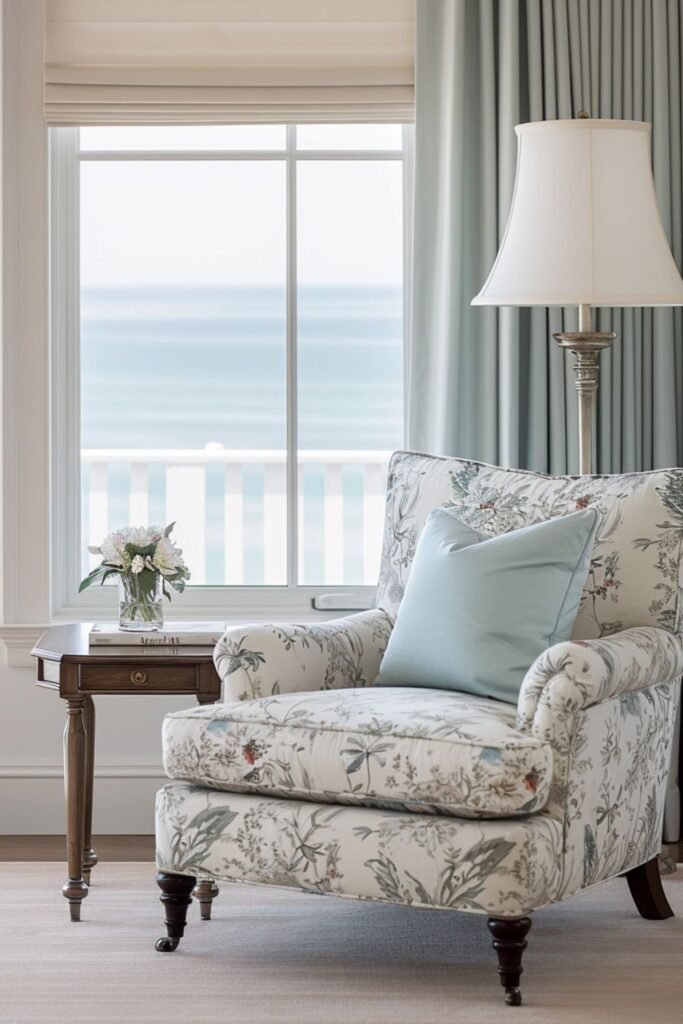
Within a shared seating group, placing the chair’s front legs on the rug can help connect it visually to the sofa. Check stability, especially if the rug has a thick pile or the chair swivels.
For more guidance on rug sizing and furniture placement, read our guide on how to choose an area rug.
Choose a side table you can reach naturally while seated. Its height should work with the chair’s arms and your sitting position.
If your chair shares a seating area with a sofa, our guide on how to choose a coffee table can help you bring the arrangement together.
Consider how the chair looks from the room’s entrance, too. When its back faces the doorway, the rear upholstery, frame, and detailing become part of the composition.
9. How to Choose an Accent Chair: Buying Checklist
Before placing an order, confirm that you can answer these questions:
- Purpose: Does the chair support the activity you have planned?
- Fit: Have you checked overall dimensions and usable seat measurements?
- Comfort: Can you sit, rest your arms, and stand comfortably?
- Proportion: Does its scale and visual weight work with your sofa?
- Movement: Is there room to approach, walk past, swivel, or recline?
- Materials: Do upholstery and care requirements suit your household?
- Delivery: Have you checked the access route and delivery requirements?
- Purchase terms: Do you understand the total cost, lead time, warranty, and return conditions?
If two chairs meet these criteria, consider which one contributes something the room needs: softness, texture, a stronger silhouette, or a quieter balance.
Frequently Asked Questions
Should an Accent Chair Match the Sofa?
It can, but it does not have to. Matching upholstery can create continuity, while a different fabric, shape, or material can introduce variety. Look for a clear relationship with the room’s palette and furnishings.
Can an Accent Chair Be Taller Than the Sofa?
Yes. A taller chair can bring height and definition to a seating group. Consider its overall bulk and effect on views, and compare seat heights separately from back heights.
Do Two Accent Chairs Have to Match?
No. Matching chairs create repetition, while different chairs can accommodate individual preferences. Similar scale or a shared color, material, or detail can help them feel connected.
What Type of Accent Chair Works in a Small Living Room?
Choose a chair with an efficient footprint, sufficient usable seat space, and room around it for movement. Slim arms, an open frame, or a tighter back may help, but always check the actual dimensions.
Final Thoughts
The right accent chair brings comfort and character into the same decision. It fits the person who uses it, relates thoughtfully to the surrounding furniture, and occupies its space with purpose.
Begin with daily life, check the measurements, and take time to understand how the chair will feel. Color and shape become easier to choose when those foundations are in place.
A beautiful room becomes more inviting when its chairs offer a reason to sit down and stay awhile.