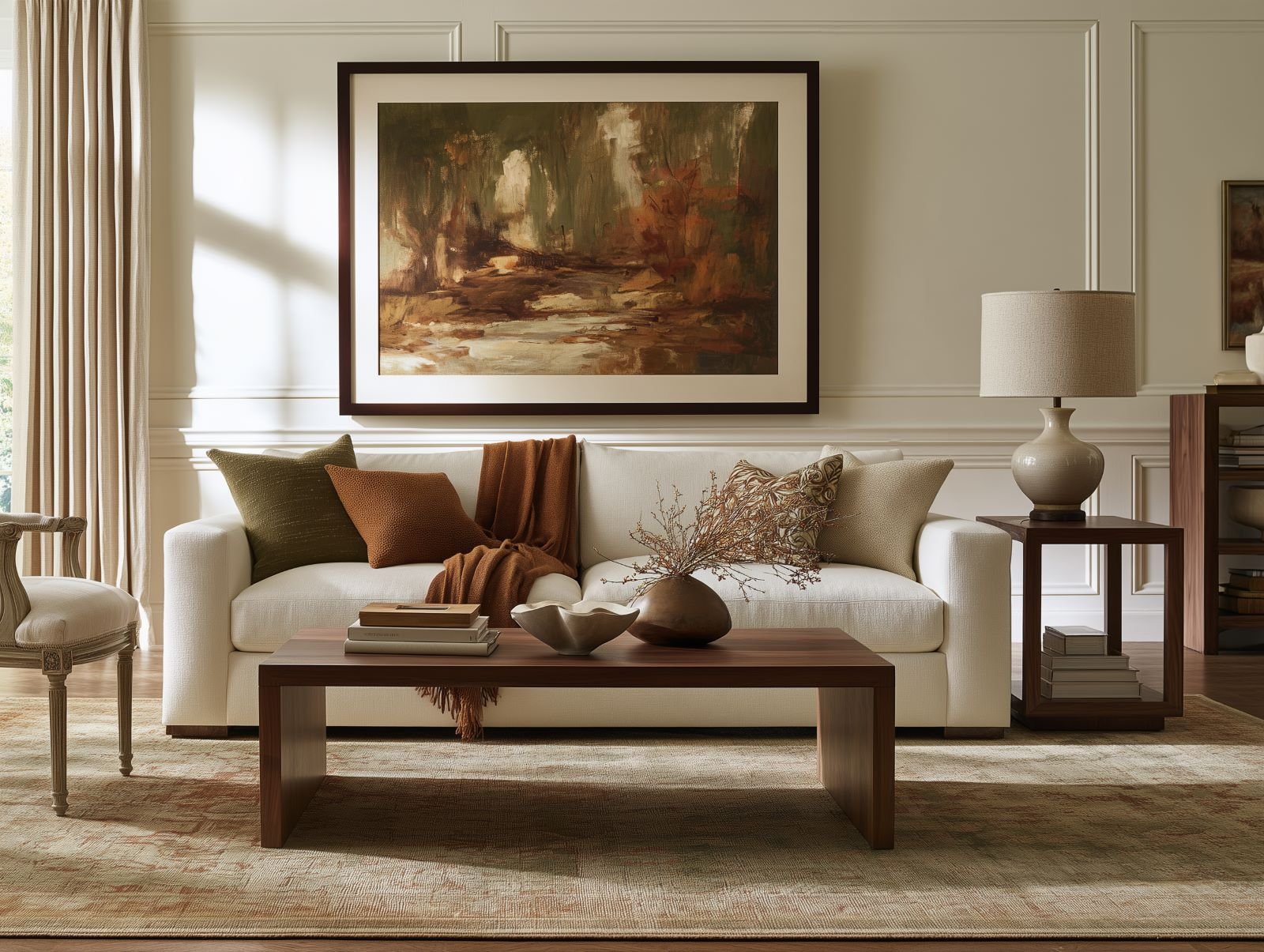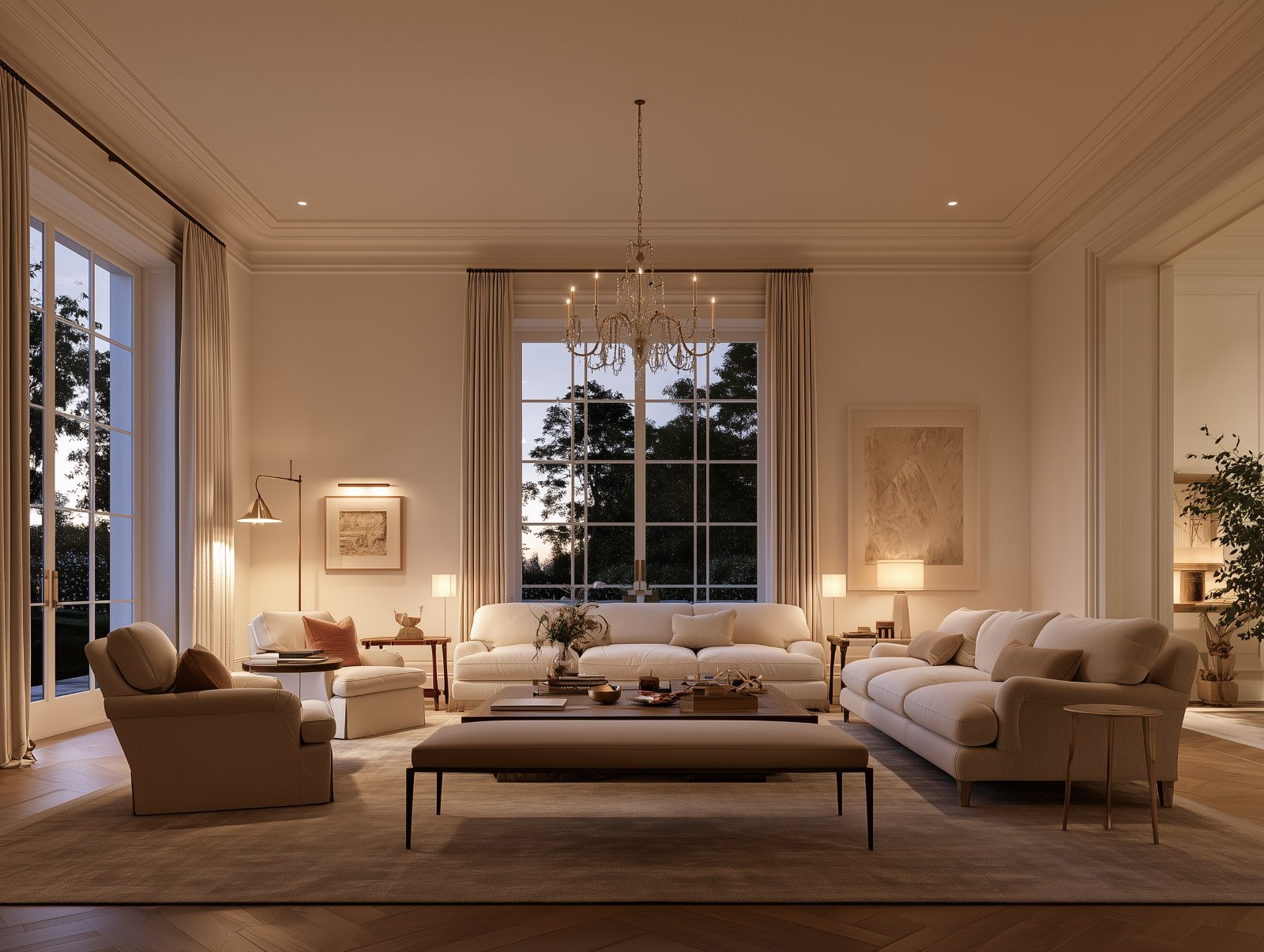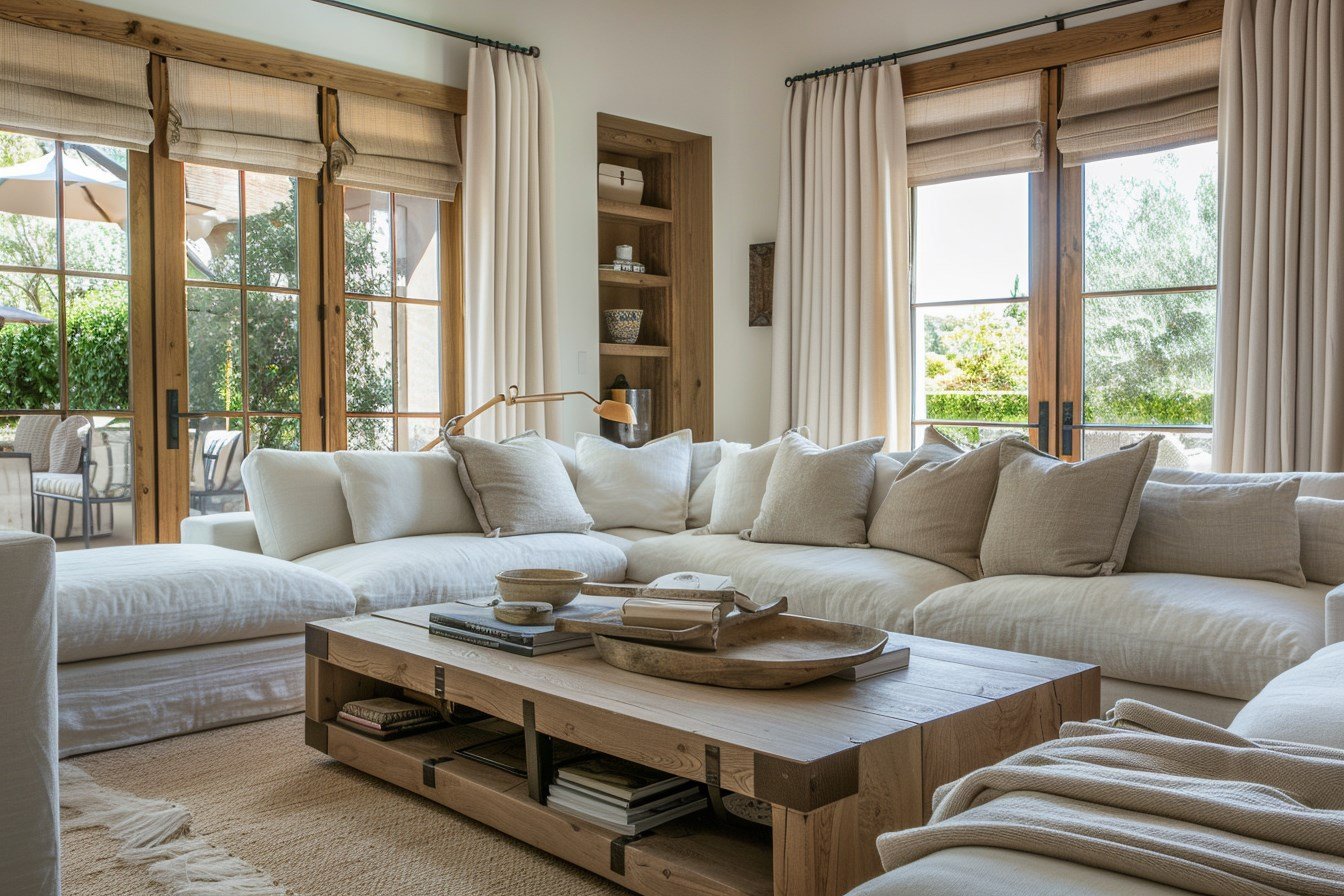
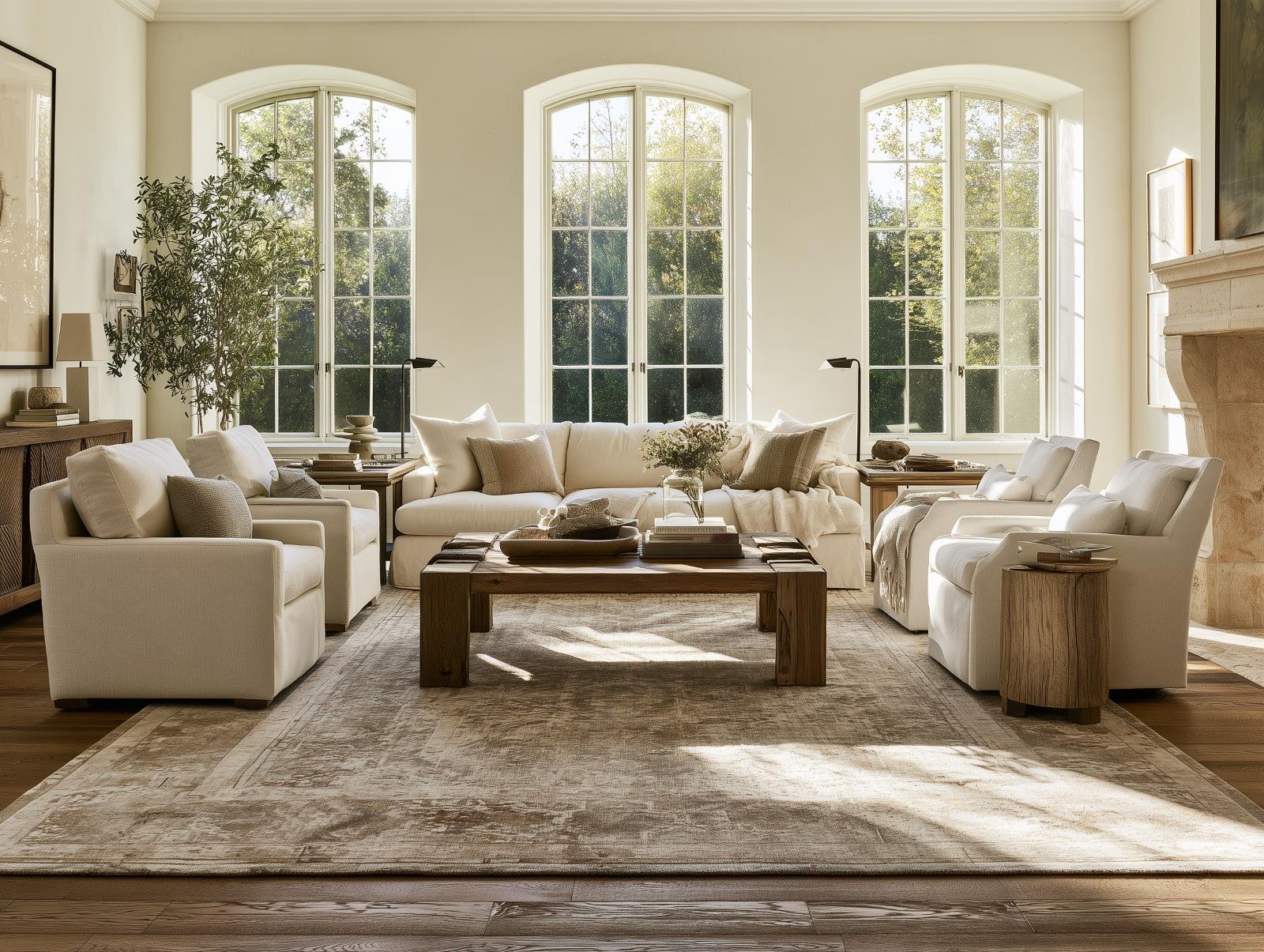
Knowing how to choose an area rug can completely change the way a room feels. It can make furniture feel connected, define a seating area, soften hard surfaces, introduce texture and color, and bring warmth to a space.
But choosing the right rug involves much more than finding a pattern you love.
After more than four decades working in architecture and interior design, I’ve learned that one of the most common rug mistakes is also one of the easiest to avoid: choosing the rug as an isolated decorative piece instead of considering the room as a whole.
The right rug should relate to the architecture, the furniture arrangement, the proportions of the room, and the way you actually live in the space.
In this guide, I’ll walk you through how I approach choosing an area rug—from size and placement to material, texture, color, pattern, and decorating style—so you can make a choice that feels beautiful, intentional, and right for your home.
Start With the Room, Not the Rug
When I begin thinking about an area rug, I don’t start by looking at rugs.
I start by looking at the room.
A rug is part of a larger composition. Before deciding on color, pattern, or material, understand what the rug needs to accomplish within the space.
Look at the Furniture Arrangement First
The furniture arrangement is often more important than the dimensions of the empty room.
In a living room, for example, the rug should help visually connect the sofa and chairs so they read as one seating group rather than individual pieces floating around the room.
In a bedroom, the rug should relate to the bed and provide softness where you actually step.
In a dining room, it needs to accommodate not only the table but also the chairs when they are pulled out.
This is why I prefer to think of a rug as an anchor for the furniture arrangement, rather than simply something used to cover an empty section of floor.
Consider Architecture and Traffic Flow
Look at doorways, fireplaces, built-ins, floor transitions, circulation paths, and other architectural elements.
A rug should define a space without interfering with how you move through it.
In an open-plan home, rugs can be especially useful because they create visual boundaries between areas without adding walls. A well-placed rug can tell your eye, this is the living area, while another grouping defines dining or conversation space.
Measure Before You Shop
Never rely on memory or guesswork.
Measure the room and the furniture arrangement, then use painter’s tape to outline possible rug dimensions directly on the floor.
This simple step can immediately show whether an 8′ × 10′ rug feels generous enough or whether the room really needs a 9′ × 12′.
Architect’s Tip: Before ordering, use painter’s tape to mark the rug dimensions on the floor. Then step back and look at the entire furniture grouping—not just the empty floor around it. It is much easier to change painter’s tape than return a large rug.
How to Choose the Right Area Rug Size
If there is one decision I would prioritize when choosing an area rug, it is scale.
A beautiful rug in the wrong size can make an otherwise well-designed room feel off.
And while the dimensions of the room matter, don’t choose the rug based on room size alone. In most spaces, the more useful question is: What size rug will properly anchor the furniture grouping?
Why a Rug That’s Too Small Can Throw Off the Entire Room
One of the most common mistakes I see is a rug that sits like a small island in the middle of a furniture arrangement.
Instead of connecting the pieces, it emphasizes the gaps between them.
The room can suddenly feel smaller and the furniture less substantial—even when neither the room nor the furniture has changed.
A properly scaled rug creates a larger visual foundation and helps the furniture feel intentionally connected.
When You’re Between Two Rug Sizes
When both sizes work physically and the budget allows, I generally prefer the more generous option.
That does not mean bigger is always better. The rug still needs enough breathing room around it and should respect circulation, doors, and architectural boundaries.
But if the smaller option barely reaches the furniture while the larger one comfortably anchors the arrangement, the larger rug will often create a more resolved room.
Living Room Rug Size and Placement
The living room is where rug placement tends to create the most confusion because there is no single configuration that works for every space.
The goal is not to follow a rigid rule. The goal is to make the seating arrangement read as a cohesive group.
Common living room rug sizes include 8′ × 10′ and 9′ × 12′, but these dimensions should be treated as starting points. Your sofa length, chairs, tables, furniture layout, and room proportions should determine the final choice.
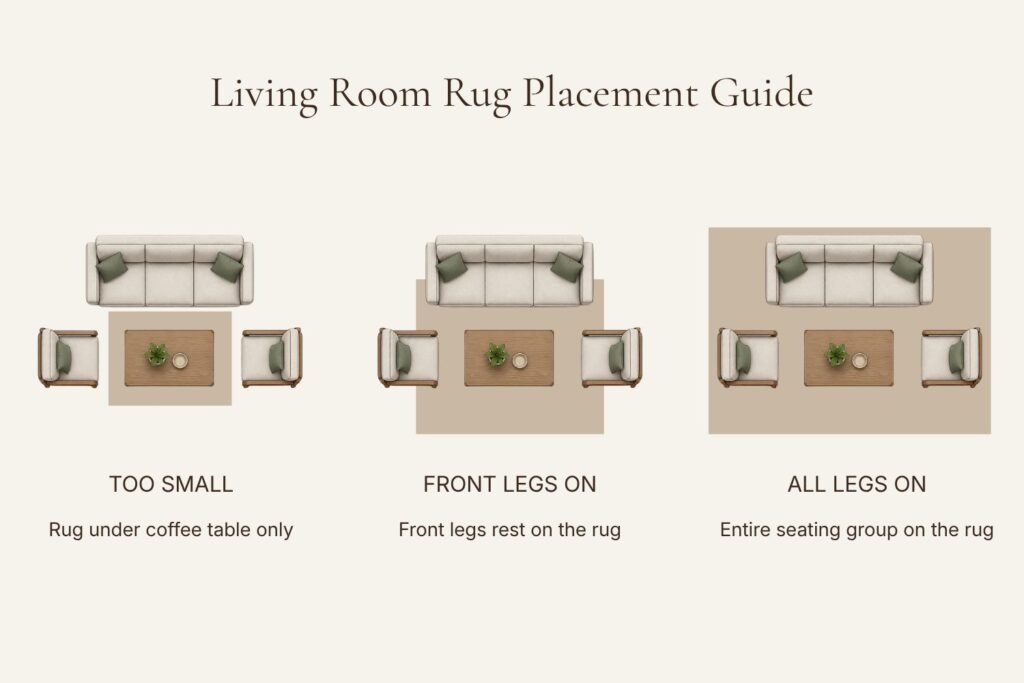
All Furniture Legs on the Rug
In a large living room, placing the sofa and chairs completely on the rug can create a beautiful, generous foundation.
This works particularly well when the seating arrangement floats away from the walls or when you want to define a large conversation area.
The rug should extend far enough beyond the furniture that it feels intentional rather than tightly fitted underneath it.
Front Legs on the Rug
For many living rooms, placing the front legs of the sofa and chairs on the rug is an excellent solution.
It visually connects the seating pieces while allowing you to use a somewhat smaller rug.
The important detail is consistency. You want the furniture to appear related to the rug rather than having one piece connected and another visually floating away from it.
Whenever possible, avoid a small rug that sits only beneath the coffee table without reaching the sofa or chairs. Instead of anchoring the seating group, it can make the rug—and often the entire arrangement—feel undersized.
How Far Should the Rug Extend Beyond the Sofa?
Rather than concentrating on one exact number, look for visual balance.
The rug should generally extend beyond the width of the sofa so the sofa does not appear wider or heavier than the foundation beneath it.
The proportions of the room, sofa, side tables, chairs, and circulation area should all influence the final dimension.
Architect’s Tip: Think of the rug as the visual footprint of the conversation area. If the furniture feels connected when you look at the entire grouping, the proportions are probably working.
This is an excellent example of why I consider standard rug-size charts a starting point, not a substitute for looking at the actual room.
Bedroom Rug Size and Placement
A bedroom rug has two jobs: it should visually ground the bed and add comfort where it matters.
A tiny rug completely hidden underneath the bed does neither particularly well.
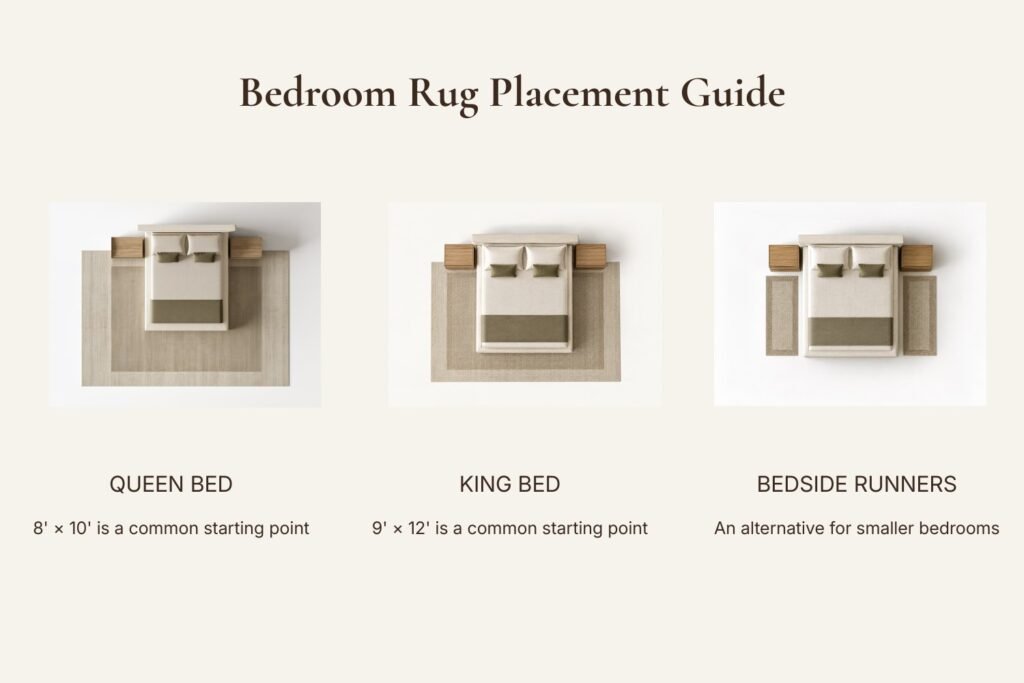
Rug Placement Under a Queen Bed
For a queen bed, an 8′ × 10′ rug is a common starting point because it can provide visible rug area along the sides and at the foot of the bed.
The rug can begin in front of the nightstands and extend beneath the lower portion of the bed. In a larger room, a more generous rug may allow the entire bed and nightstands to sit on it.
The right approach depends on the room dimensions and the effect you want to create.
Rug Placement Under a King Bed
A king bed has considerable visual weight, so it usually benefits from a generous rug. A 9′ × 12′ is a common starting point for many king-bed arrangements, although larger rooms may call for an even larger rug.
This is another situation where undersizing can be especially noticeable.
Before buying, mark the rug dimensions on the floor and make sure enough material will remain visible around the bed to make the rug feel purposeful.
Alternative: Runners Beside the Bed
Not every bedroom needs one large area rug.
In smaller rooms—or when you want to preserve beautiful flooring—runners placed alongside the bed can provide softness and warmth without covering as much of the floor.
Dining Room Rug Size and Placement
In a dining room, function should determine size.
The rug must relate not only to the dining table but to the space the chairs occupy when someone is actually using them.
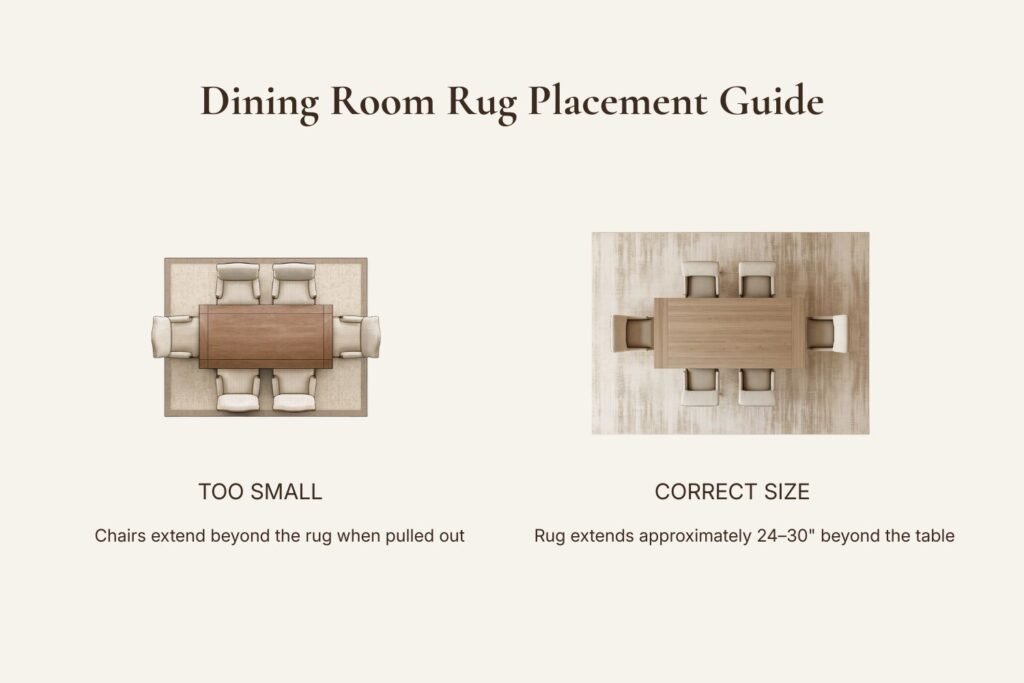
Allow Enough Room for Pulled-Out Chairs
The most important test is simple:
Pull out the dining chairs as you normally would to sit down. Their legs should remain comfortably on the rug.
As a useful starting point, allow approximately 24 to 30 inches of rug beyond the edges of the table, then test that dimension with your actual chairs.
If the back legs repeatedly catch on the edge of the rug, the rug is probably too small.
This is why measuring only the tabletop is not enough. Measure the functional footprint of the dining set.
Architect’s Tip: Before choosing a dining room rug, pull every chair into a comfortable seated position and measure the full footprint. Function comes first here—the rug should accommodate the way the dining area is actually used.
Should the Rug Match the Shape of the Table?
It can, but it doesn’t have to.
A round rug beneath a round table can create a beautiful sense of symmetry, while a rectangular rug can emphasize the proportions of a rectangular room.
Rather than matching shapes automatically, consider the table, room architecture, circulation, and overall composition together.
Choose the Right Rug Material for Your Lifestyle
Once size and placement are resolved, material becomes one of the most important decisions.
This is where beauty needs to meet real life.
A rug for a quiet bedroom does not need to perform the same way as one in a family room, entry area, or dining room.
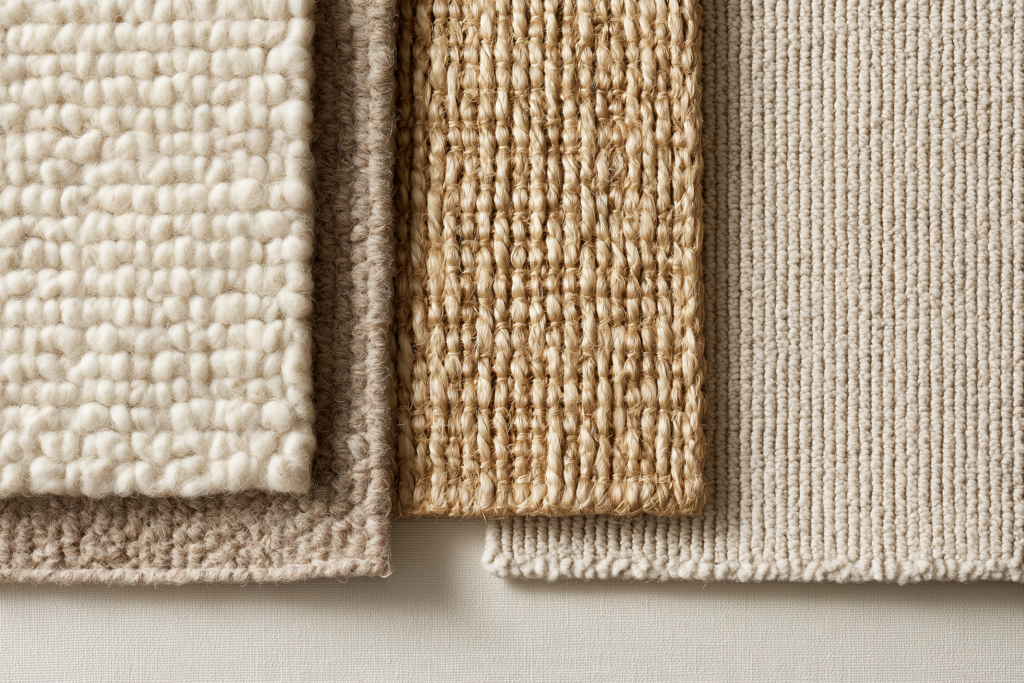
Wool
Wool is one of my favorite rug materials because it combines beauty, comfort, resilience, and longevity.
A quality wool rug can be an investment, but it can also age beautifully and work in many different interior styles.
Natural Fibers
Jute, sisal, and other natural fibers introduce wonderful organic texture.
They work especially well in relaxed, coastal, organic-modern, and layered interiors.
Keep comfort and maintenance in mind, however. Some natural-fiber rugs can feel rougher underfoot or be less forgiving of spills.
Synthetic and Performance Rugs
Performance fibers can be an excellent practical choice for busy households, children, pets, dining areas, or spaces where easy maintenance is a priority.
The category has improved considerably, so practical no longer has to mean unattractive.
Washable Rugs
Washable rugs can make sense in high-use areas where frequent cleaning is important.
I would still evaluate them using the same criteria as any other rug: Does the scale work? Does the material look appropriate in the room? Does it lie well? Does it contribute to the overall design?
Convenience should be part of the decision, not the entire decision.
Consider Delicate Fibers Before You Buy
Some rugs made with viscose, rayon, or other delicate fibers can have a beautiful silky appearance, but they may require more careful maintenance and may not be the most practical choice for every household or high-traffic location.
Always consider how the rug will actually be used—not simply how beautiful it looks in a photograph.
Understand Rug Pile and Texture
Texture affects both how a rug looks and how it performs.
Low-Pile vs. High-Pile Rugs
Low-pile rugs tend to be easier to maintain and allow chairs and furniture to move more easily, making them particularly practical for dining rooms and high-traffic spaces.
Higher-pile rugs can add softness and luxury, making them appealing for bedrooms or quieter living areas.
The best choice depends on how the room is used.
Where Texture Makes the Biggest Difference
In a room with a quiet neutral palette, texture becomes especially important.
A beautiful wool weave, natural fiber, subtle raised pattern, or hand-knotted surface can add depth without requiring strong color.
This is one of the reasons a neutral room does not have to feel boring.
How to Choose Rug Color and Pattern
Once size, placement, material, and texture are established, we can finally talk about the part most people want to start with: color and pattern.
When the Rug Should Quietly Ground the Room
If the room already contains strong artwork, patterned upholstery, dramatic architecture, or multiple visual focal points, a quieter rug can give everything else room to breathe.
Neutral does not necessarily mean plain. Look for subtle variation, texture, tonal pattern, and beautiful materials.
When the Rug Can Become the Starting Point
Sometimes the rug is the piece that begins the entire design.
A beautiful patterned rug can establish the color palette and guide choices for upholstery, pillows, artwork, and accessories.
If you are starting with an empty room, this can be an effective approach because the rug gives you a visual foundation from which to build.
How to Mix a Rug With Existing Furniture
If your major furniture pieces are already in place, look at their undertones, scale, texture, and visual weight.
A patterned rug can bring life to a solid sofa, while a quieter rug may balance more expressive upholstery.
If you are still selecting your major furniture pieces, my guide to choosing the perfect sofa can help you think about scale, proportion, comfort, and longevity before completing the room.
How to Choose an Area Rug for Your Interior Design Style
Your decorating style can help narrow your options, but I would never treat style labels as strict rules.
Some of the most interesting rooms come from combining pieces that are not all from exactly the same category.
Use your design style as a guide while leaving room for contrast and personality.
Traditional: Look for Persian-inspired and Oriental patterns, borders, detailed motifs, wool, and colors with depth and history.
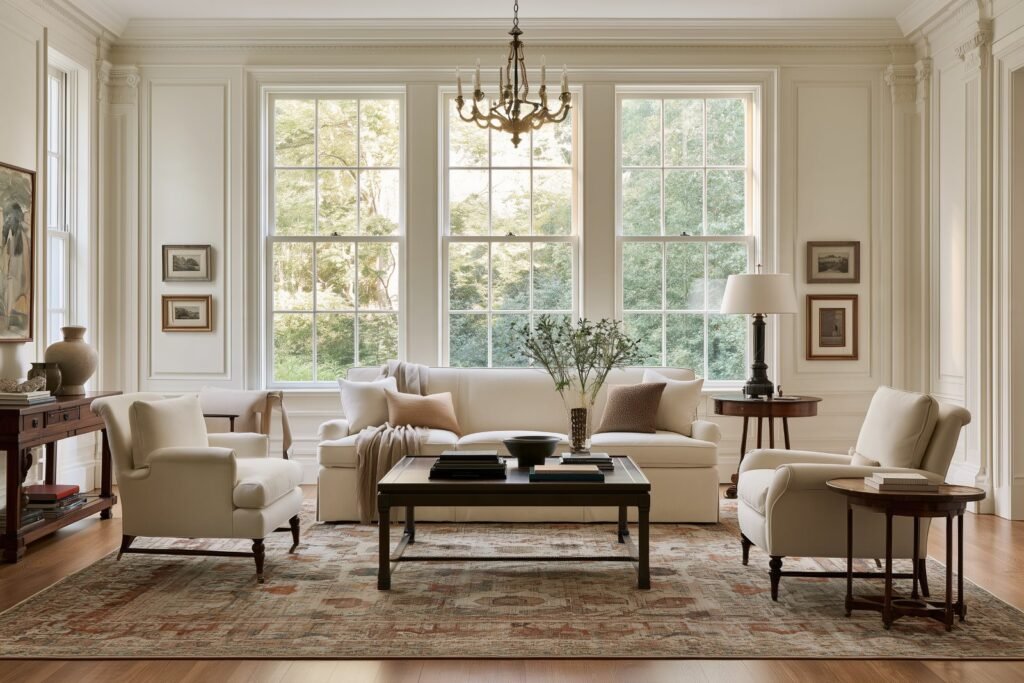
Transitional: This is particularly versatile. Consider softened traditional motifs, subtly distressed patterns, sophisticated neutrals, and designs that bridge classic and contemporary elements.
Modern and Contemporary: Cleaner lines, tonal rugs, abstract patterns, restrained geometry, and simpler compositions can complement a modern room without competing with its architecture.
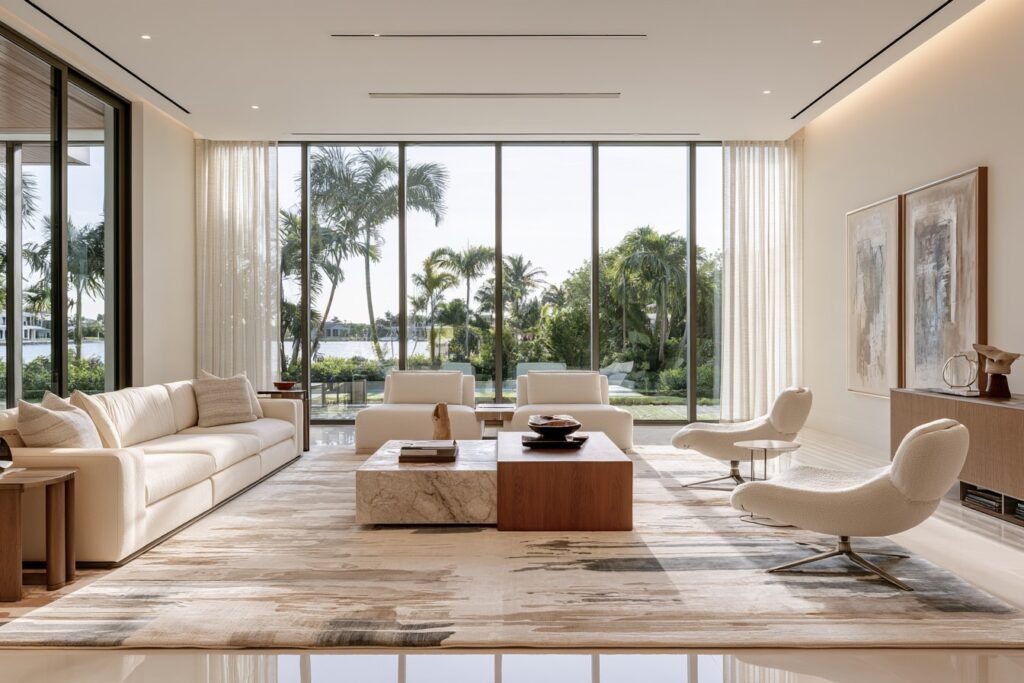
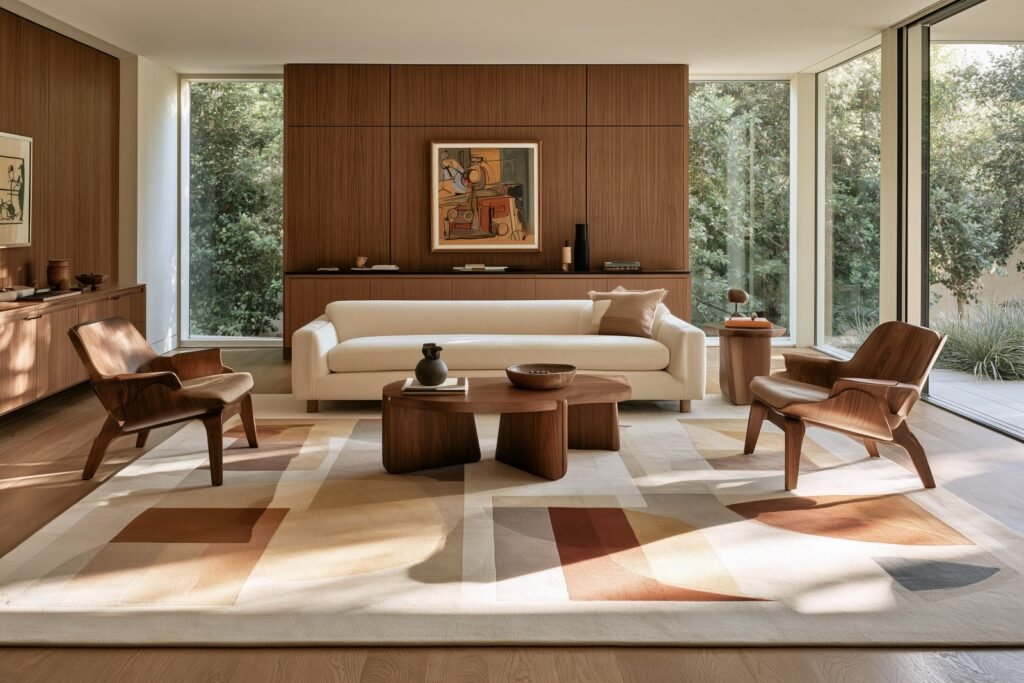
Mid-Century Modern: Geometric motifs, organic forms, graphic patterns, and warm, earthy color combinations can relate beautifully to the clean furniture silhouettes associated with this style.
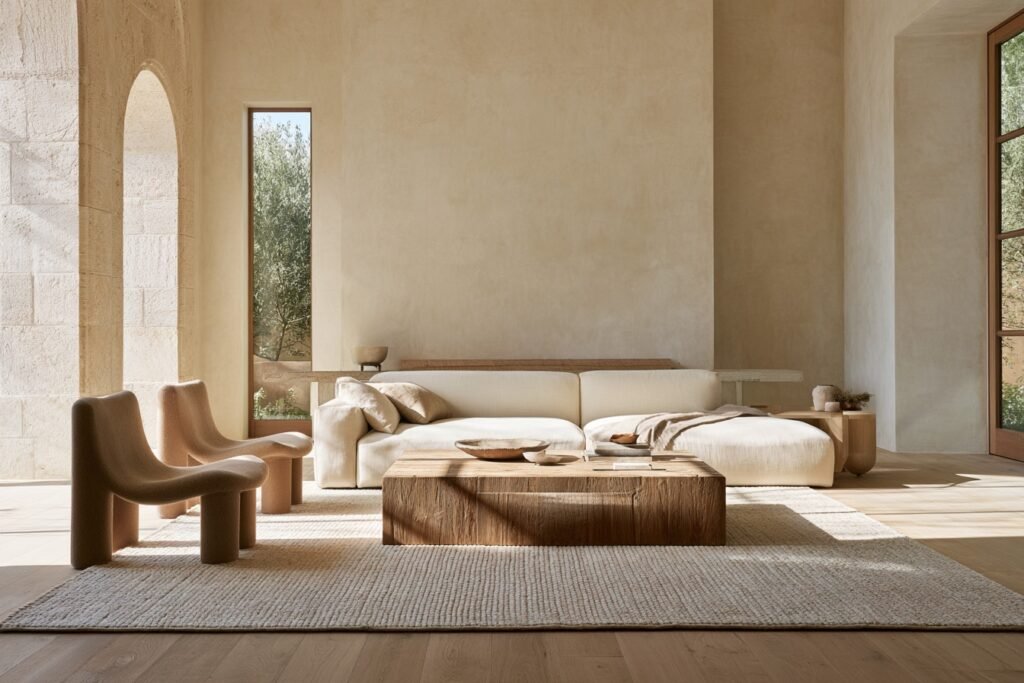
Organic Modern: Natural materials, wool, jute, warm neutrals, understated patterns, and visible texture work especially well.
Coastal: Think light, natural, and relaxed rather than overtly nautical. Natural fibers, subtle stripes, soft blues, sand tones, and textural neutrals can create the feeling without turning the room into a theme.
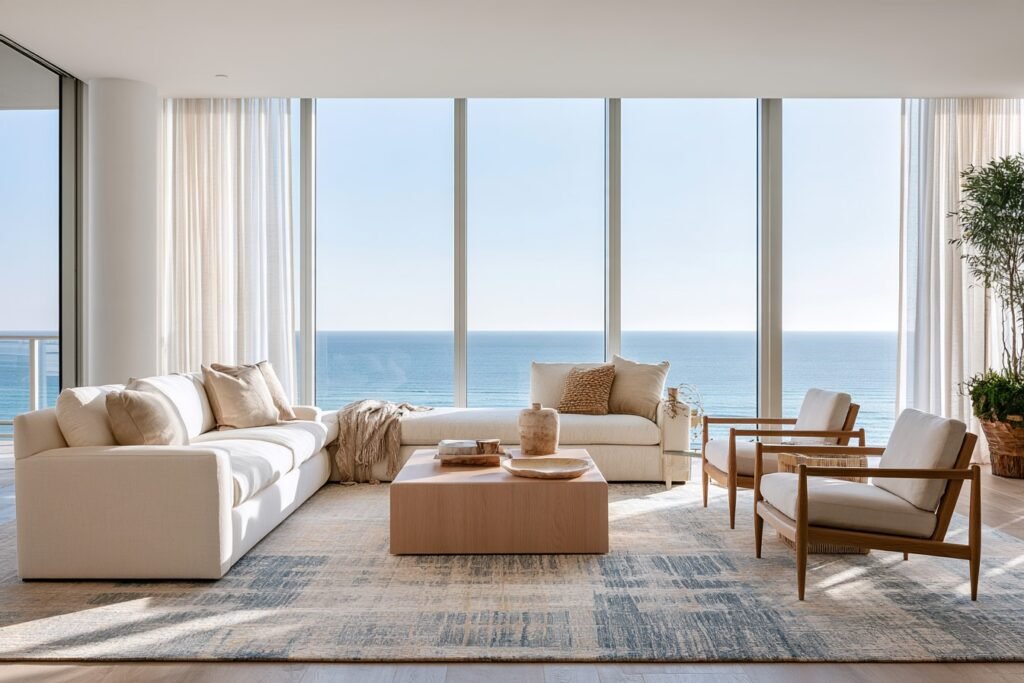
Farmhouse and Modern Farmhouse: Vintage-inspired patterns, comfortable textures, muted colors, and natural materials can complement the warmth and informality of these interiors.
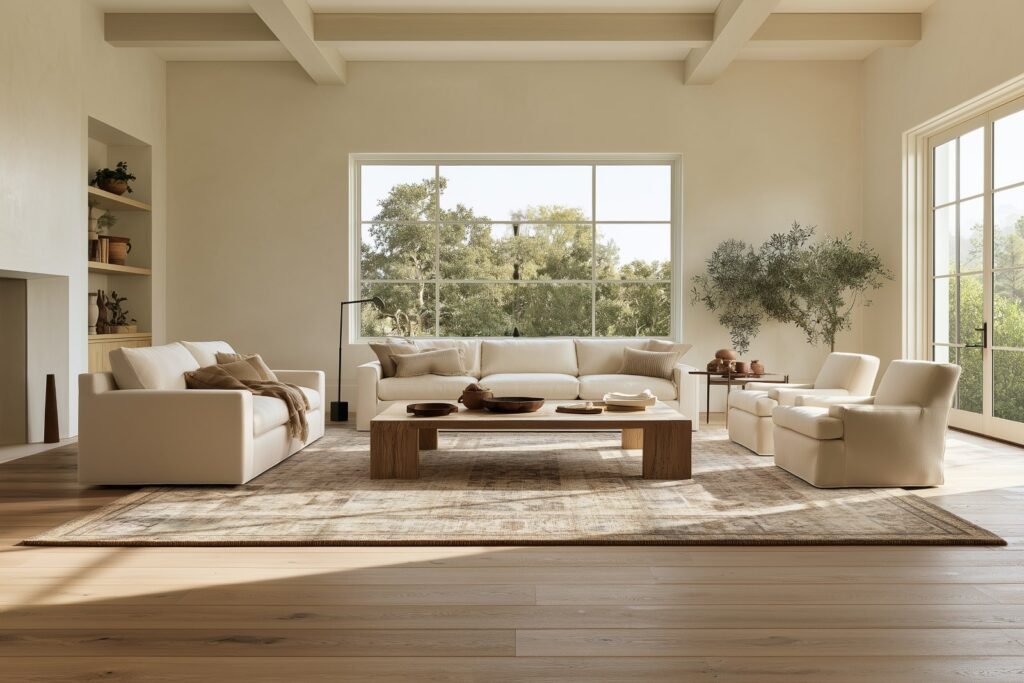
Casual: Prioritize comfort, durability, forgiving patterns, and easy-care materials. A casual room should feel welcoming rather than overly precious.
Bohemian: Vintage-inspired motifs, global influences, stronger color, and layered texture can bring personality and collected character.
Industrial: Lower-pile rugs, distressed patterns, restrained colors, and strong texture can soften hard architectural materials such as concrete, brick, steel, and exposed wood.
Minimalist: Choose restraint rather than emptiness. Tonal patterns, subtle texture, beautiful fibers, and quiet neutral palettes can add warmth without visual clutter.
And remember: contrast can be powerful. A traditional rug can add soul to a contemporary room, while a restrained modern rug can calm a space filled with antiques.
The objective is not to make every object match a style label. It is to create a room that feels cohesive.
Do You Need a Rug Pad?
In most situations, I recommend considering one.
A good rug pad can help reduce movement, add cushioning, protect flooring, and make a rug feel more substantial underfoot.
The appropriate pad depends on the rug and flooring, so always check the rug manufacturer’s recommendations—particularly with specialty flooring or rugs with unusual backing.
Common Area Rug Mistakes to Avoid
Most rug mistakes are easier to prevent before purchasing.
Choosing a rug that is too small.
If it cannot visually connect the furniture arrangement, reconsider the size.
Buying the rug before finalizing the furniture layout.
Whenever possible, establish the major furniture placement first. It is much easier to choose the correct rug dimensions when you know exactly what the rug needs to anchor.
Choosing color before scale.
A perfect color cannot compensate for poor proportions.
Ignoring furniture placement.
Measure the furniture grouping, not just the empty floor.
Forgetting traffic flow and doors.
A rug should not interfere with circulation or prevent a door from opening comfortably.
Choosing the wrong material for your lifestyle.
Think realistically about children, pets, spills, traffic, cleaning, and maintenance.
Forgetting about pile height.
This matters particularly around dining chairs, doors, and frequently moved furniture.
Skipping the rug pad without considering the consequences.
Movement, comfort, flooring, and rug construction all matter.
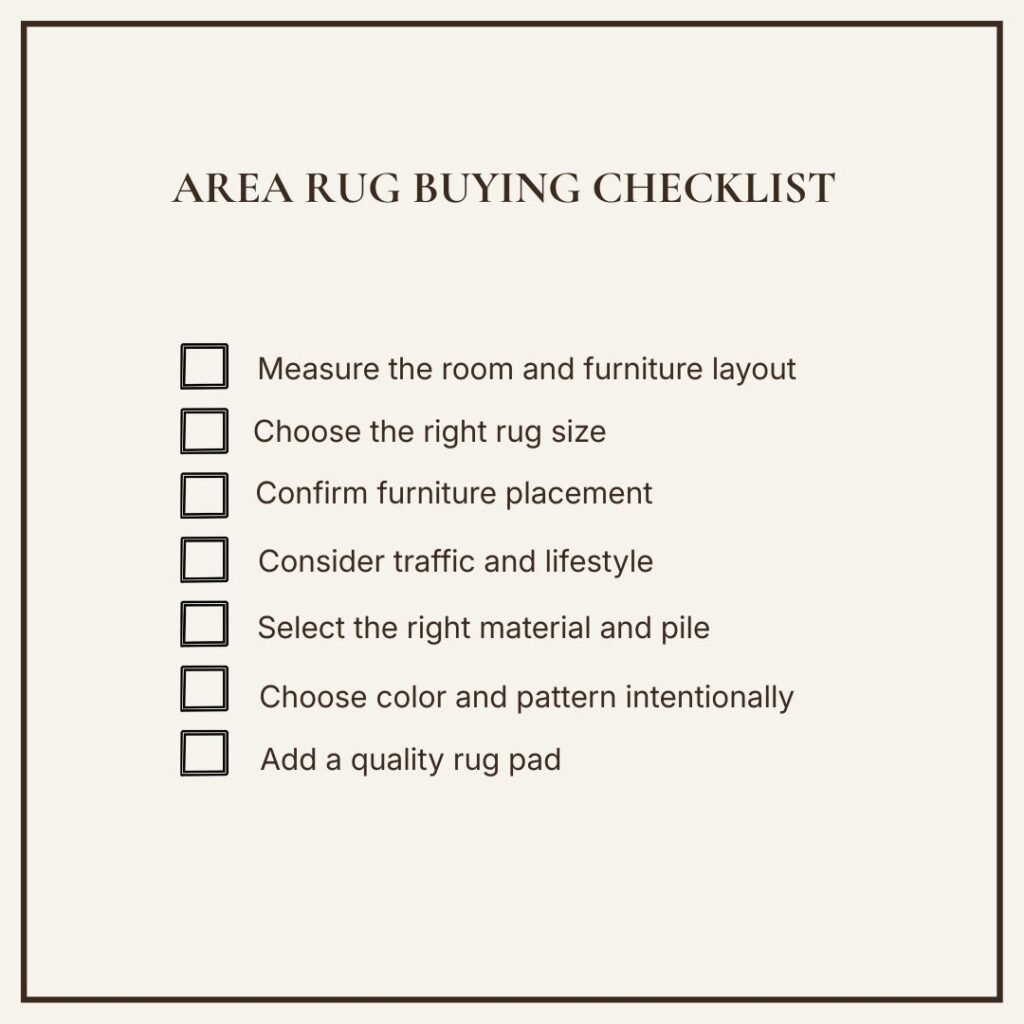
A Simple Area Rug Checklist
Before ordering an area rug, ask yourself:
- Have I measured the room?
- Have I measured the furniture arrangement?
- Have I marked the rug dimensions on the floor?
- Is the rug large enough to connect the furniture?
- Will doors and circulation remain clear?
- Is the material appropriate for how we use the room?
- Is the pile practical for the location?
- Does the color complement the existing room?
- Does the pattern add the right amount of visual interest?
- Does the rug work with my decorating style without feeling overly matched?
- Do I need a rug pad?
If you can answer these questions confidently, you are much less likely to regret the purchase.
Area Rug FAQs
What size area rug do I need?
Start with your furniture arrangement rather than room dimensions alone. The rug should be large enough to visually connect the major pieces while leaving appropriate circulation and breathing room around the composition.
Should a rug go under the sofa?
In many living rooms, yes—at least partially. Having the sofa’s front legs on the rug often creates a strong visual connection, while larger spaces may accommodate the sofa completely on the rug.
Should all furniture legs be on the rug?
Not necessarily. Both all-legs-on and front-legs-on arrangements can work beautifully. Consistency and proportion are more important than following one universal rule.
Is an 8′ × 10′ or 9′ × 12′ rug better for a living room?
It depends on your furniture arrangement and room dimensions. Outline both sizes with painter’s tape before purchasing. If the 8′ × 10′ barely connects the furniture while the 9′ × 12′ comfortably anchors it, the larger option may create better proportions.
How large should a dining room rug be?
As a starting point, allow approximately 24 to 30 inches beyond the table, then test the dimensions with your chairs pulled out. The goal is for the chair legs to remain comfortably on the rug during normal use.
What rug material is best for a living room?
There is no single best material. Wool offers durability and beauty; performance fibers can be practical for busy households; and natural fibers provide wonderful texture. Choose according to traffic, maintenance, comfort, budget, and the character of the room.
Do I need a rug pad?
Often, yes. A rug pad can improve stability and comfort and may help protect the flooring, but choose one compatible with both your rug and floor finish.
Final Thoughts: Let the Rug Anchor the Room
Choosing an area rug becomes much easier when you stop treating it as an isolated accessory.
Start with the room.
Look at the architecture. Study the furniture arrangement. Think about scale and circulation. Decide how the space needs to function. Then consider material, texture, color, pattern, and style.
A successful rug does more than decorate the floor. It gives the furniture a foundation, establishes visual boundaries, adds warmth and texture, and helps the entire room feel connected.
And that is ultimately what I look for when designing any space—not simply beautiful individual pieces, but a room in which everything feels as though it belongs together.